


Blog Articles

On June 1, 2018, the General Administration of Customs of the People Republic of China (GACC) announced there will be additional information required on all inbound and outbound shipments by air or ocean. The new information required includes Canadian Business Numbers and phone numbers on the bill of lading or master airway bill.
Read MoreOn June 1, 2018, the General Administration of Customs of the People Republic of China (GACC) announced there will be additional information required on all inbound and outbound shipments by air or ocean. The new information required includes Canadian Business Numbers and phone numbers on the bill of lading or master airway bill.
GACC Announcement No. 56 (2017)
The announcement was made in 2017 by the GACC and provided airlines and freight forwarders with sixth months notice to prepare for the implemented changes. The GACC first updated their systems on May 22, 2018, and the full implementation took place on schedule, June 1, 2018.
China Customs Advanced Manifest
If you are a Canadian importer and you wanted your air or ocean import or export to go smoothly, it is recommended you extract all of the information you will need when you make your purchase order. This way you will have all of the information required to comply with China Customs Advanced Manifest (CCAM) for your import or export with China. The information you will need to collect includes; the company name, the company’s code, your contact’s name and phone number, the country code and the notify party if the Bill of Lading is To Order.
How It Affects Canadian Businesses
If you are a Canadian Business you will use your Business Number (BN) as the required company code, enterprise number or organization code. It is important to note, everyone who is importing or exporting by air or ocean with China will need to provide all of this additional information required for the CCAM.
Some Require Freight Forwarder Information
In addition to the shipper and consignee information required for the CCAM, some agents in China are also requesting additional information for the freight forwarder. It is better for you to be safe rather than sorry, therefore it is recommended you provide your freight forwarders business number on all of your master airway bills and bills of lading to ensure all of your imports or exports with China go smoothly.
If You Need Assistance
If you need assistance with importing or exporting your commodities into or out of China, PCB Freight Management can help with both the freight forwarding and customs brokerage. Call us today to talk one-on-one with an expert or simply click on the request a quote button below to get started.

What are they? Why are they needed in the import process? There are four main documents commonly used in the international shipping of cargo. What are they and why are they needed?
Read MoreThere are four main documents commonly used in the international shipping of cargo. What are they and why are they needed?
1. Bill Of Lading
What is it?
It is one of the most important documents in the shipping industry. It is a contract of carriage between the carrier and the shipper. It states the terms and conditions of carriage and acts as a receipt of goods and proof of ownership. It is used as a verification document of goods received.
It describes the goods, provides the quantity and their destination. It must accompany the goods on their journey and be signed by the carrier, shipper and receiver to confirm receipt of the goods and that they were received in acceptable condition. It is used by all types of carriers, freight forwarders and logistic companies. The carrier issues the bill of lading (BOL) to the shipper. It is generally provided to the shipper, the customs broker, freight forwarder or third party managing the import process.
The Importance Of A Bill Of Lading Part 2
Why is it needed?
The bill of lading is a means of declaring the freight to Customs. It is also provided to the customs broker to assist with preparing the documents of release and accounting for Customs. It ensures a proper declaration has been made to Customs and it is used to verify the piece count, weight, description of goods and date of pick-up or export. In Canada, bills of lading are enforced by the Bills of Lading Act.
2. Commercial Invoice
What is it?
The commercial invoice is an important shipping document. It is a legal document issued by the seller to the buyer and serves as a contract and/or proof of sale or conditions of trading goods. Unlike the BOL, it does not specify the ownership or title of goods.
Download your fillable Commercial Invoice here
Why is it needed?
It is required by Customs to classify the goods for the assessment of duties and taxes. It specifies the price paid, value if not being sold, quantity and includes the trade or sale conditions agreed upon between the seller and buyer. It assists Customs and/or the customs broker to properly and correctly value and classify the goods and determine if other documentation is required by Customs or other Participating Government Agencies (PGAs) which regulate the importation of certain goods.
3. Certificate of Origin
What is it?
A document that certifies that goods in a particular export shipment are wholly obtained, produced, manufactured or processed in a particular country. The certificate of origin may be prepared by the exporter or the manufacturer but it is generally certified by the exporting country’s Chamber of Commerce. Many countries around the world offer digital or electronic COOs.
Why is it needed?
The certificate of origin provides Customs of the importing country the “proof of origin'' of the goods imported to determine if the goods are subject to a specific trade agreement which may provide a preferential tariff treatment which results in a lower or no duty rate. It also determines whether the goods can be legally imported or exported.
4. Carrier Manifest
What is it?
The carrier manifest is important in the international transport of goods. It acts as a record of a shipment entering or exiting a country. It is produced by the carrier, listing all the cargo and total number of goods. The manifest must include a unique reference number for each shipment that can be traced or tracked. Generally the cargo manifest lists all the bills of lading along with the details and total number of goods transported. The individual bills of lading are generally attached.
Why is it needed?
The carrier manifest must be produced to Customs and serves as their report of cargo. It enables Customs to control the movement of the goods and ensures a proper declaration is made for the payment of duties and taxes. All goods imported or moving in transit must be reported to Customs at the First Port of Arrival. The carrier manifest is a method of meeting this requirement whether in writing or electronically submitted via ACI.The carrier is responsible for reporting the conveyance and cargo through the submission of a conveyance report and a carrier manifest.
There are many other documents that are important when it comes to international shipping. The four shipping documents described above are the main documents required in the import process. Further information on international shipping and related documents can be provided by one of our Trade Advisors.


An underrated aspect of freight management is the temperature of the goods from departure to arrival. Many people take for granted the amount of work and knowledge experienced freight managers have when transporting goods across the world.
Read MoreAn underrated aspect of freight management is the temperature of the goods from departure to arrival. Many people take for granted the amount of work and knowledge experienced freight managers have when transporting goods across the world.
Heat Wave Strikes Western Canada
This is evident with the heat wave striking a few of the major cities in Western Canada. Most specifically Calgary, Alberta, where a heat warning was issued on Friday August 10th, 2018. Temperatures are projected to hit 37C (99F). 37C would be a new record temperature for the city of Calgary, Alberta. The previous high was set at 36.1C in 1919 and again in 1933. Almost 100 years later a new maximum temperature could be reached by a city that hosted the Winter Games in 1988.
CN Rail Takes Preventative Action
With the record setting heat levels, CN Rail has taken preventative action to make sure the people and goods aboard their trains are kept safe and away from harm. This is done by implementing heat slows in Alberta and Saskatchewan, where trains are run at slower speeds in order to prevent the rails from buckling.
Buckling Train Tracks Can Be Hazardous
Buckling is when hot temperatures start to curve the steel rails making them hazardous to travel on. Heat will cause rails to expand, and when the rails expand they put a lot of pressure on the ties, ballasts and anchors that keep the rails attached to the ground. When rails buckle they turn from the straight sturdy rail you are accustomed to seeing, to a slithering snake that can be dangerous for a train to travel on, especially at high speeds. By slowing trains down because of the intense heats, the trains will travel safer, and will also counteract buckling by placing less force on the rails. Less force on the rails will lead to safer operations for the people and goods travelling along the tracks.
Expect Delays With Extreme Temperatures
The downside to the heat slow will be the delay in people and goods arriving at their ports. CN Rail predicts this will cause delays of 24 hours to allow for the slower trains to travel safely along the overheating tracks. If you need more information on the heat slows or any other freight related question, please contact a Freight Manager at PCB Freight Management for expert insights.

With the right logistics partner, you can make shipping your next vehicle a smooth process. With over 10 years of industry experience, we can ship most types of vehicles worldwide. Whether you are moving your personal vehicle overseas or buying vehicles for resale, our comprehensive vehicle shipping services can be customized to your needs.
Read MoreVehicle Shipping
With the right logistics partner, you can make shipping your next vehicle a smooth process. With over 10 years of industry experience, we can ship most types of vehicles worldwide. Whether you are moving your personal vehicle overseas or buying vehicles for resale, our comprehensive vehicle shipping services can be customized to your needs. PCB Freight Management can do:
- Door-to-door transportation
- Personal, commercial and specialty vehicles
- Canada, US and international
- Ground, air and ocean
- Import-export documentation
- Customs clearance -- Canada and US
- Competitive industry pricing
- Licensed and fully-insured
PCB Freight Management Ltd. provides transportation services to clients internationally for all modes of transport (air, ocean, rail, highway and courier). Our freight management team works to manage large projects such as dams, power plants, and infrastructure that requires multiple loads of goods to be delivered at various times until completion of the project. No job is too big or too small. Challenging freight is this company’s specialty. PCB Freight does not own modes of transportation and instead works with many transportation companies to provide the delivery service that best meets clients’ needs. PCB Freight clients are anyone or any business looking to move freight, personal belongings, cars and packages anywhere by any mode of transport.

It is important you read the fine print and are happy with the terms of agreement you make in the freight forwarding process. This includes Matters Affecting Performance which you will find on many carrier’s Bill of Lading.
Read MoreIt is important you read the fine print and are happy with the terms of agreement you make in the freight forwarding process. This includes Matters Affecting Performance which you will find on many carrier’s Bill of Lading.
MLB Makes An Unusual Request
It was a most unusual request even for the most seasoned transportation professional. In the summer of 2002, an official from Major League Baseball asked a container carrier if they could send a helicopter out to a ship anchored in the Port of Los Angeles to remove a container from the ship. The container was packed with promotional goods for the all star game taking place in Milwaukee, Wisconsin. If the product wasn’t there in time, it was worthless. The ship was at anchor in the port along with dozens of others due to a work slowdown caused by a contract dispute between the Longshoremen’s Union and the Maritime Employers Association. The shipping line was not able to assure Major League Baseball that the container would be off the ship in time for the All Star Game, despite receiving the cargo well in advance of the scheduled arrival date. Had all gone according to plan, there would be no talk of helicopters rescuing freight. A rescue that would have been completely at the expense of the importer, not the carrier.
Matters Affecting Performance
Many shippers do not realize that when they contract carrier services. The carrier is under no obligation to complete the terms of the contract if there are extenuating circumstances preventing them from delivering the goods. On the back of most ocean bills of lading is a clause that outlines Matters Affecting Performance. Here is the terminology used on the bill of lading from a major container carrier: Without prejudice to any rights or privileges of the Carriers under covering Bills of Lading, dock receipts or booking contracts or under applicable provisions of law, in the event of war, hostilities, warlike operations, embargoes, blockades, port congestion, strikes or labour disturbances, regulations of any governmental authority pertaining thereto or any other official interferences with commercial intercourse arising from the above conditions and effecting the Carrier's operations, the Carriers reserve the right to cancel any outstanding booking or contract of carriage. At carrier’s option, cargo in transit may be enrouted to a different discharge port or destination for cargo delivery. Any additional cost associated to this arrangement shall be for account of cargo.
Shippers Must Be Prepared
Shippers should take careful note of the wording particularly as it includes port congestion and strikes. At what point does congestion in the Port of Vancouver become so great that the carrier will invoke the clause? Would a rail strike cause shippers to pick up their cargo in Seattle, or even Prince Rupert? The risk to the shipper is added costs and delays, and perhaps as was the case with Major League Baseball, perishable promotional goods possibly missing their delivery date. In the end, Major League Baseball absorbed the costs of trucking containers over 2,000 miles from Los Angeles, California to Milwaukee, Wisconsin. An unexpected but necessary expense to get all of the all star game memorabilia to the fans attending the game.
You Have A Helping Hand
The world of international freight can have many twists and turns. You can be prepared with the help of the experts at PCB Freight Management. Contact us for all your freight forwarding and logistics needs.

Whether you are a large-scale exporting operation or a small business, the Canadian Export Reporting System (CERS) is a vital system to master. This fully electronic system replaced the old Canadian Automated Export Declaration system and has been the Canada Border Services Agency’s (CBSA) system of choice for the management of Canadian export declarations ever since.
Read MoreWhether you are a large-scale exporting operation or a small business, the Canadian Export Reporting System (CERS) is a vital system to master. This fully electronic system replaced the old Canadian Automated Export Declaration system and has been the Canada Border Services Agency’s (CBSA) system of choice for the management of Canadian export declarations ever since. The information included is used by Canadian Customs and Statistics Canada.
But what is CERS? How does it fit into the larger context of exporting in Canada? Do all exporters in Canada need to use CERS, and, more importantly, what are the requirements for using this system? In this week’s post, we dive into everything you need to know about this program, along with best practices for its use as you export your goods to the world at large.
What is CERS?
CERS is a fully online export reporting system built and managed by the CBSA. This system is a mandatory part of exporting from Canada, as it facilitates the secure transmission of export declarations, summary reports, and other necessary documentation to Customs.
As a digital portal, it offers exporters key opportunities to validate their data before submission, while also providing easy access to their submission history. In addition to helping to streamline the export process, CERS provides exporters with a wealth of information, including access to digital assistance and official online materials.
A CERS declaration is an export declaration required by Canadian Customs and Statistics Canada for goods valued at over $2,000 Canadian or are otherwise restricted. There are several exceptions that we will discuss momentarily.
Who Needs CERS?
Nearly every commercial good exported out of Canada requires a CERS declaration, but there are notable exceptions.
The entire list of exceptions can be found on the “Goods that Do Not Need an Export Declaration” CBSA page, but the most common ones fall under two broad categories:
- Goods exported for consumption in the US (Including Puerto Rico or the US Virgin Islands)
- Non-restricted goods valued at under $2,000 Canadian dollars.
If you are uncertain about whether your goods will require a CERS declaration, be sure to get in touch with a broker to make sure.
How Do I Use and Register For CERS?
Registration for CERS is a relatively in-depth process, but if you follow the CBSA Guide on registering for the CERS portal, you should be well-positioned to complete it quickly and effectively.
In brief, the process looks like this:
- Confirm that your business number is designated as ‘export’ or ‘both import and export’ by contacting the Canada Revenue Agency (CRA).
- Apply to become a portal client by completing form BSF831.
- Submit the form by email for approval.
The approval process takes approximately five business days, but can take longer if there is missing or incomplete data. Once approved, the CBSA will send an authorized code to the email address indicated on the application form.
It is worth mentioning here that you will need to be registered in the CARM Client Portal as an exporter to complete the registration process, despite the fact that CARM is predominantly considered an importer tool.
The reason for this is that you must have an active Business Number (BN) for CERS, along with enrolment in the Exporter Program, to get the relevant RM export program identifier. Both of these come from registration in the CARM Client Portal, for which we provide assistance through our CARM resource page.
Once you have them, you are free to register for the CERS as per the guide. Regarding the program’s usage, the CBSA provides a wealth of relevant information on using the CERS portal, including an exporting guide and a range of video tutorials that demonstrate its functionality.
How to Submit Through CERS
While it is essential to have everything you need together before you begin, determining what you need can be part of the challenge.
For example, do your goods require an export declaration as detailed above? Does it need a permit, certificate, or license for exporting? These are the key questions you need to know the answers to before you start. Once again, the CBSA offers helpful information; you are also encouraged to contact your broker for further assistance.
When submitting your goods through CERS, you will need to input the 8-digit Canadian Export Classification number that describes your goods. This number can be obtained by following the link above, or it is one of the many ways a customs broker can help with CERS reporting.
When Do You Submit Your CERS Report?
Ultimately, it depends on what mode of transportation your goods are using. Generally speaking, the following are considered the accepted guidelines:
Marine - 48 hours before the goods are loaded onto the vessel
Air - Two hours before the goods are loaded onto the aircraft
Mail - Two hours before the goods are delivered to the post office
Rail - Two hours before the goods are loaded onto the railcar
Highway - Immediately before leaving the country
If you are exporting goods that do require a permit, you are going to need to present a paper copy of your declaration, which can be a printout of your electronic export declaration if you wish, together with the other applicable permits, certificates, and licenses to the CBSA at the location specified by the permit. If it isn’t specified, then you must bring it to the export reporting office closest to your port of entry.
If this seems complicated, or if you are hoping that someone can take the wheel on this, then there’s great news. While PCB does not offer CERS reporting as an individual service, when you work with PCB Freight for your international shipping needs, we manage the CERS for you as an added bonus. Not only will you have an expert assist with your CERS, but you’ll have one of the industry leaders in logistics and freight forwarding keeping your goods moving.
Get in contact with our team to get started today!


Come September 30th, 2020, the system in which you report is being replaced by the Canada Export Reporting System (CERS). Keep reading to learn more about this change.
Read MoreIf you are exporting regulated goods out of Canada, you may already be aware of the requirements to report those exits to Canada Border Services Agency (CBSA) and Statistics Canada on an Export Declaration. Come September 30th, 2020, the system in which you report is being replaced by the Canada Export Reporting System (CERS). Keep reading to learn more about this change.
Whether you report your export declarations directly to Customs yourself or if you use a service provider such as a logistics or freight management company, it’s helpful to understand the changes that are taking place.
Previously, regulated exports needed to be declared to Customs and Statistics Canada on a B13A manual form or through the Canadian Automated Export Declaration (CAED). This will no longer be accepted come October 1st, 2020. Instead, exporters, or their service providers, must only report to CBSA through their CERS.
What Are The Differences Between CAED And CERS?
Some of the main differences between CAED and CERS are:
- CAED declarations were reported to CBSA and Statistics Canada, whereas with CERS, reporting only goes to CBSA.
- Instead of printing a copy of the CAED declaration, a CERS will need to be printed and given to Customs for review and approval (stamping) prior to export.
- Monthly summary reporting (SRP) is available through CERS.
- There are changes to the Proof of Report number.
What Is Freight Insurance And What Do Your Freight Insurance Rates Cover?
What Exports Require A Declaration?
If exports meet one or any of the following criteria, you will be required to submit an export declaration:
- Commercial goods valued over $2000 CAD, destined for a country outside of the U.S. (including the Virgin Islands and Puerto Rico)
- Commercial goods of any value that are regulated or prohibited commodities, destined for a country outside of the U.S. (including the Virgin Islands and Puerto Rico)
Export declarations must be made prior to exporting these goods from Canada.
Are Freight Forwarders And Customs Brokers The Same?
How Do I Get A CERS Account?
Exporters, or their service providers, who have previously exported will have received a notice from CBSA with instructions on how and when to activate your CERS account. The CBSA has created a quick reference guide that you can use for additional information on this process.
New exporters will need to apply for a CERS Export Authority Report number (which can take up to 5 - 10 business days at the time of this publication). Visit the CERS Portal for more information or contact us to obtain one for you.


To determine whether blockchain technology can solve the original bill of lading problem introduced in part 1, it is helpful to understand what is an original bill of lading, and what is blockchain.
Read More“Some scholars have argued that the invention of double-entry bookkeeping enabled the rise of capitalism and the nation-state. This new digital ledger of economic transactions can be programmed to record virtually everything of value and importance to humankind: birth and death certificates, marriage licenses, deeds and titles of ownership, educational degrees, financial accounts, medical procedures, insurance claims, votes, provenance of food, and anything else that can be expressed in code.” Don and Alex Tapscott, Blockchain Revolution.
To determine whether blockchain technology can solve the original bill of lading problem introduced in part 1, it is helpful to understand what is an original bill of lading, and what is blockchain.
What Is An Original Bill Of Lading?
An original bill of lading is a negotiable document; a contract between a shipper and carrier. An original bill of lading contains key data elements, including:
- Shipper
- Consignee
- Notify Party
- Vessel Name and Voyage Number
- Container Number
- Seal Number
- Cargo Description and Weight
- On Board Date
- Port of Loading
- Port of Discharge
- Final Delivery Place
- And the Terms of Freight Payment: Prepaid or Collect
Generally, the original bill of lading does not contain the costs or freight prices associated with the contract between the parties. On the back of the original bill of lading are the general terms and conditions.
What Is Blockchain?
A blockchain is a decentralized distributed ledger (public or private) that contains transactions. It was developed in 2008 by a person or group of people known as Natoshi Sakamoto to support the exchange of Bitcoin. It is permanent, and most importantly, unhackable. Blockchain has been called the new network of trust. It allows peer to peer transactions without the need for a third party to verify the data. Blockchain can either be public where everyone has access to view the block, or private where only individuals with private ‘keys’ can access the block of data.
Once a block has been created, a decentralized computer network known as nodes will compute a unique hash. The hash is an alphanumeric record of the individual block. The hash of a previous block is referenced in the next block, thus creating the chain. If someone tried to change the hash, it will be detected in all previous blocks and be rejected, thus making a block permanent.
What is interesting is a block can contain the elements of a contract in digital form, known as a smart contract. The smart contract allows parties to conduct business based on negotiated terms into a time stamped digital format.
How Blockchain Smart Contracts Can Improve Freight Shipping
Tech companies have created platforms allowing users to create smart contracts within the blockchain. Blocks can be made private to ensure only parties with access to the block can access the data. Smart contracts require parties to first verify the date before a hash can be created. Imagine a time when the elements of the bill of lading are loaded into a smart contract, and the shipper, supplier, carrier, terminal, customs and others verify the data in the block before it is finalized. Once finalized and the hash is created, the data cannot be changed or hacked. By using a cryptocurrency, the consignee can ‘pay’ the shipper as the contractual elements are met and timestamped.
There would be no need for an original bill of lading, as the fully executed smart contract would act as trusted verification between the parties; a contract that cannot be copied, faxed or emailed and an original bill of lading without the need of a third party. That is the potential of blockchain and how blockchain technology can prevent potential shipping fraud.
If you need assistance with any of your freight forwarding please give us a call and our experienced freight forwarders can help you get your goods where they need to go.

It is hard to believe that if the global container crisis wasn’t enough to contend with, now buyers are being laden with skyrocketing air freight rates due to the unprecedented demand and limited supply. In the last week alone, rates have jumped 10%, with higher percentages expected on lanes originating from China and Europe.
Read MoreIt is hard to believe that if the global container crisis wasn’t enough to contend with, now buyers are being laden with skyrocketing air freight rates due to the unprecedented demand and limited supply. In the last week alone, rates have jumped 10%, with higher percentages expected on lanes originating from China and Europe.
The Culprit: Huge Demand vs Limited Supply
With ocean containers in short supply, many buyers and manufacturers are leaning on air freight capacity to help deliver goods to North America. If you are unfamiliar with the current container crisis, here is a synopsis. In the simplest of explanations, there is an uneven distribution of empty containers at shipping and destination points, putting a strain on ship availability.
Adding to this issue is the global fight against Covid-19. Flights at as many as 15 Asian Airports are being cancelled for various reasons related to the global pandemic including staff shortages, Covid-19 outbreaks and dwindling landing permissions. In an effort to combat the spread, some air employers have staff on a rotation of work, self-isolation and off-duty time, resulting in a pilot shortage as well as the loss of half the workforce at any given time.
Air freight is also being gobbled up by large volume buyers, leaving smaller ad-hoc shippers in a lurch.
With no end in sight, many companies are scrambling to find ways to get their product transported, and are using air laneways to do it.
Increasing Costs To Be Expected
Typically, seasonal air freight rates are approximately $3 to $4 per kilogram. These costs are expected to climb with retail stores shelves lacking in abundance, and the busiest shopping season right around the corner. Peak Season Surcharges are also looming and it is expected that costs may spike over $10 per kilogram. Even with these increased rates, air freight may still be a more advantageous option to ensure your goods arrive on time and get to your customers.


A bill of lading is a receipt provided by the carrier to the consignee. The receipt contains a detailed list of all of the shipments goods.
Read MoreA bill of lading is a receipt provided by the carrier to the consignee. The receipt contains a detailed list of all of the shipments goods.
The Canada Border Services Agency (CBSA) will need to know exactly what is on your truck. To help make sure all of your goods are accounted for and declared, you must supply a bill of lading or pick up receipt when faxing your Pre-Arrival Review System (PARS) entry to your customs broker.
Why A Bill Of Lading Is Used
1. The main purpose of the standard straight bill of lading is it is a contract of carriage.
Other Bill Of Lading Purposes Include:
2. It may incorporate the full terms of the contract between the consignor and the carrier by reference.
3. It is a receipt signed by the carrier confirming whether goods matching the contract description have been received in good condition.
4. When completed in full, it helps the customs broker match up commercial clearance paperwork to ensure a complete declaration for all of the goods aboard the truck.
The carrier or the shipper can complete it, but the driver of the transport company is to sign and date the bill of lading once the goods are onboard their truck.
What Is Freight Insurance And What Do Your Freight Insurance Rates Cover?
Why A Bill Of Lading Is Important
For Customs purposes the most important details on the bill of lading are:
- Piece count (total skids, boxes, pallets)
- Weight (total weight of the goods listed)
- Description of the goods
- Date (the date of pick up/export is used to establish the date for exchange rate)
If there is only one (1) location you have picked up goods from, then only one (1) bill of lading or pick up receipt is required. If you are picking up from multiple locations, then you need to have a bill of lading or pick up receipt for each location you have picked up from.
The Importance Of A Bill Of Lading
Commercial Documents
When picking up freight from the shipper, they may give commercial documents to you. If they do, please send your commercial documents to the customs broker with the bill of lading or pick up receipt. It is important that you send the customs broker all the documents you have. It helps ensure that all required documents are in place to declare those goods to Customs.
If the shipper does not supply you with commercial documents, please let the customs broker know as soon as you know, so they can work on getting the documents in order.
Why Carriers Care About The eManifest Cargo Report And Bill Of Lading Matching
Other Documents
Often, a commercial invoice and bill of lading are sufficient for the customs broker and CBSA to process your load. There are many instances where special documentation will be required. Some examples of goods that need additional documents are:
- CFIA regulated goods (fresh fruits & vegetables, fresh cut flowers)
- Transport Canada regulated goods (vehicles) - which require another government agency (in addition to CBSA) to review the import
When faxing your PARS to the customs broker, simply affix your barcode label to the bill of lading. Make sure you are not covering up any important information. Be sure to clearly indicate which port you are crossing at and on what date and time. Please also include your phone number so that you can be contacted in the case there are any documentation issues.
Remember to ALWAYS confirm that your load has been set up before you get to the border.
Be accountable for the goods you are transporting and your cross border experience. Providing all the appropriate paperwork to your customs broker will truly ease your journey. If you need assistance with your bill of lading or any other customs brokerage or freight forward services, feel free to contact the experts at Pacific Customs Brokers for all of your international trade needs.

A costly mistake; one that could have been avoided if policies were strictly followed. In ocean shipping, it was the most fundamental error that could be made - releasing a shipment without presenting the original bill of lading.
Read MoreA costly mistake; one that could have been avoided if policies were strictly followed. In ocean shipping, it was the most fundamental error that could be made - releasing a shipment without presenting the original bill of lading.
A Freight Relationship Built On Trust
It seemed innocent at the time. The import shipping clerk at this particular global container carrier had a good relationship with the Importer. The customer received at least one container of foodstuffs from the shipper every single week. He had been importing for over three years and his business was valuable to the carrier and their agent. The import shipping clerk knew the procedures well and had over 20 years experience in the business.
The terms of the freight were prepaid and the bills of lading were consigned ‘To Order’. At first the importer would present himself to the carrier’s office and surrender the original bill of lading to effect the freight release. In time, the importer and import customer service representative got to know each other and built a level of trust.
Give An Inch, Take A Mile
One day, the importer called the customer service representative and said that he could not arrive at the office to surrender the bill of lading that day. Instead he would fax (yes that long ago) the front and back of the bill to get the release, and subsequently be in the office the very next day to deliver the original bill of lading as required. The carrier acted in accordance and the importer was in the office the next day to deliver the bill of lading as promised.
This went on for months. The importer would call and fax the bill of lading to the carrier, get the freight released and deliver the original the next day. Then one day, it all went south.
Bad Habits Die Hard
The import clerk released the shipment against a fax copy of the bill of lading, but the importer failed to deliver the original bill of lading the next day, and the next and the day after that. Repeated calls to the importer went to voicemail. Emails were ignored. The freight was picked up and the empty container was delivered back. The cargo was gone.
At this point, the import clerk informed the Customer Service Manager. Shortly after, the shipper contacted the carrier with a claim for the full value of the shipment as they were still holding all three of the original bills which were issued at origin. The file moved quickly to the Vice President who became privy to the carrier’s errors and omissions insurance did not provide coverage specifically for ‘release of shipments without proper presentation of original bills of lading’. The carrier paid restitution to the shipper of $53,000 USD, the commercial value of the shipment.
The original bill of lading itself is a contract between the shipper and carrier. It is a contract of the receipt of goods, and under certain conditions confirms cargo is loading on board a particular vessel. If consigned to order, the original bill of lading is a negotiable document. The bearer of the original bill of lading is fully entitled to the goods. While use of the bill of lading can be traced back to medieval times, widespread use did not begin until the 16th century. Modern rules for shipping and bills of lading began in 1924 with the Hague Rules.
Can Current Technology Prevent Potential Fraud?
The technological breakthrough of the fax machine caused the fraud that led to the errant release of the goods. The fax machine allowed for the copying and sending of documents to a far too trusting import customer service representative. What you have to ask yourself is how vulnerable is the industry with today’s technology 20 years later? Can we use current technology as a solution to potential fraud? Find out in part 2.

There is a difference between Freight Forwarders and Customs Brokers, but often they can perform the same role for the client.
Read MoreWhat Is A Freight Forwarder?
Transporting goods from their production site to the final destination can be a complex undertaking. Freight Forwarders concentrate on the logistics and physical transportation of cargo internationally. Logistically, Freight Forwarders are multi-modal and they arrange for the transportation of a shipment via truck, plane, ship or combination thereof. Generally the Freight Forwarder acts as the “travel agent” for their client to move their cargo and facilitate the entire trip to include paperwork and documentation.
Freight Forwarding is one of the common activities within the Canadian logistics industry and as globalization continues to grow so does this industry. Most international Freight Forwarders in Canada are members of the Canadian International Freight Forwarders Association (CIFFA), which is an internationally recognized professional association. Always verify that that your Freight Forwarder is a member of CIFFA. Members are required to carry minimum liability insurance coverage and must adhere to standard trading practices and responsibilities for Freight Forwarders.
In addition to arranging transport for the goods, Freight Forwarders can also offer services which include:
- Customs entry clearance
- Trade documentation
- Insurance maintenance, and
- Supply chain management
Be sure when selecting a Freight Forwarder that you are clear on what they offer for services and what they charge for those services.
What Is A Customs Broker?
A Customs Broker can be an individual, partnership, association or corporation licensed, regulated and empowered by the government of the country in which the goods are being imported. Generally Brokers submit the necessary information and make the appropriate payments to the government on behalf of their clients. They must have expertise in the entry procedures, admissibility requirements for all the various government departments and agencies, classification of the goods, valuation and the rates of duty and applicable taxes and fees for the goods to be imported. Customs Brokers can recommend to their clients the most efficient means for clearing goods through the red tape of governmental entry rules and regulations.
In addition to the tasks aforementioned, Customs Brokers can assist with:
- The coordination of Customs exams
- Customs bonds
- Duty drawbacks and reconciliation
- Advice and guidance with government audits.
Some Customs Brokers offer Freight Forwarding services in addition to storage of goods.
What Is Freight Insurance And What Do Your Freight Insurance Rates Cover?
Are Freight Forwarders And Customs Brokers The Same?
Often the role of the Freight Forwarder and the Customs Broker can overlap and be interchangeable.
For the importer or exporter it is important to understand the role of the representative you choose with respect to:
- Negotiating the freight
- Overseeing the shipping schedules
- Mode of transport
- Who will be overseeing the necessary import documentation
- The clearance process with the applicable Customs agency
In addition, you need to be diligent your representative is an expert in ensuring that shipments are compliant and move as smoothly and efficiently as possible from origin to destination.
Pacific Customs Brokers And PCB Freight Management
Pacific Customs Brokers offers brokerage services into Canada and the United States. While PCB Freight Management offers transportation logistics and storage of your shipments. If you need assistance with Customs Brokerage or Freight Forwarding do not hesitate to give our team a call for service with experience.

There are 11 different kinds of Incoterms® available for international businesses to use, and choosing the one that is most advantageous to your current import requires a keen understanding of what each term means along with the experience to recognize what makes the most sense in each situation.
Read MoreThere are 11 different kinds of Incoterms® available for international businesses to use, and choosing the one that is most advantageous to your current import requires a keen understanding of what each term means along with the experience to recognize what makes the most sense in each situation. Today, we’re going to explore the broad concept of Incoterms® in general, with a particular focus on the FCA or “Free Carrier.” It’s an excellent place to start and a great one to compare against when attempting to understand the other ten.
It’s common for new or even experienced importers to struggle with what an Incoterm® actually is, and even after the concept is well understood, it can be even harder to know which of these terms makes the most sense for your business and imports. One of the more common pitfalls we help importers avoid is the mistaken belief that Incoterms® are a one-size-fits-all selection. Many importers think that if you find a term that works for your current import, you simply apply it to all your dealings without considering the greater context, and that stems from a lack of knowledge of how these terms can help your business deals run more smoothly.
What is an “Incoterm®?”
Short for “International Commercial Term,” an Incoterm® is a set of globally agreed upon three-letter shorthands for the logistical responsibilities and understandings between buyers and sellers. Devised and managed by the International Chamber of Commerce (ICC), they are updated every ten years, and they provide a common language for importers that can help dictate the rules and understandings in international trade contracts. Generally, Incoterms® cover:
Delivery - Incoterms® create a mutual understanding around the manner in which goods are going to arrive where they need to arrive. This covers any necessary labeling or documentation that will be required for the goods to cross Customs, along with areas of potential confusion like who is responsible for the unloading and loading of goods at various locations along the import’s journey.
Costs - Incoterms® clearly lay out the the parties who are responsible for paying any fees, duties, taxes, insurance, or any other costs that may arise in the transport of the goods.
Risks - Incoterms® set out who is responsible if the goods being delivered become lost, damaged, or otherwise compromised. In a few notable cases, Incoterms® can also dictate who is responsible for insuring the goods during transport.
What Does an ‘FCA Incoterm®’ Mean?
Popular and flexible, the ‘Free Carrier’ or FCA Incoterm® begins with the seller holding most of the responsibility but soon transitions that responsibility to the buyer. This Incoterms® makes the most sense for arrangements where the buyer has an existing carrier network or better control over their transportation than the seller.
As is the case with all Incoterms®, it can be broken down into the seller’s responsibilities and the buyer’s responsibilities.
Seller’s Responsibilities
FCA begins with an agreement of a named location, and under FCA Incoterms®, the seller is responsible for the delivery, costs, and risk associated with the transport of the purchased goods until they arrive at that named location. This includes any fees, duties, documentation, or processing required for clearing Customs en route to the named location.
Buyer’s Responsibilities
The inverse is true for the buyer. The responsibilities of the two parties flip when the goods arrive at the named location. From the moment the goods are loaded onto the buyer’s collecting vehicle, all the costs and risks associated with delivering the goods fall to the buyer.
Common Uses
In general, FCA is ideal for buyers who are larger and have more ingrained logistics elements. For example, a business that has its own internal carriers will get a lot of value out of FCA, and it works for the seller as well as the risk and costs associated with the transportation of goods are limited.
FCA can also provide increased visibility, simplicity, and management over a shipment. Since the buyer is more in control over the shipment after its arrival, they can simply contact the carriers they know and work with for news on the shipment without having to contact the seller at all.
For both the buyer and the seller, this term can also represent a cost-saving as the seller often needs to provide less in terms of transport and the buyer can avoid the markups on the goods that occasionally come when the seller has greater responsibility.
Frequent Questions
As a global trade management company, we often get questions about Incoterms® and their application. Here are just a few of the specific questions we regularly get when it comes to FCA Incoterms®. If you have a question regarding FCA or any Incoterm®, please don’t hesitate to get in touch.
Who is Responsible for Loading and Unloading A Shipment?
It depends on the named place. If the named place is the seller’s premises, then it is the seller’s responsibility to load the goods onto the buyer’s transport. However, if the named place is anywhere else, then the seller is obligated to load the goods onto their own transport and bring the goods to the named place, with the buyer being responsible only for the unloading from the seller’s transport and the loading onto their own.
Who is Responsible for Packaging in Fca Incoterms®?
Packaging, as it occurs before the product ships, is the seller's responsibility. It is also responsible for export Customs clearance and any additional duties, fees, or processes involved in the initial transfer from the seller to the buyer’s named location. However, it should be noted that while the seller is responsible for any export documentation and formalities, the buyer is responsible for import formalities.
Who is Responsible for Insurance Under FCA Incoterms®?
This question is slightly more complicated. Technically, insurance is not covered in the language of the FCA Incoterm®. However, there are some assumptions that can be made based on who is responsible for risk at various points in the process.
The seller takes on all the risks and responsibilities of the shipment prior to it arriving at the named location, and it may be in their best interest to get insurance for that trip. On the other side, the buyer is responsible for the risk after this drop-off, and the associated risk may warrant insurance.
Who Issues the Bill of Lading?
In the past, this has been a point of friction between buyers and sellers. Once the seller passes control of the shipment, they lose access to some of the vital documentation and information related to that shipment. In general, carriers have no reason to provide the seller with the bill of lading necessary to make good on any letters of credit they may be using to facilitate this arrangement, and this has caused issues and delays as communication and process between both sides lacked a necessary framework.
Fortunately, in the 2020 version, FCA tactfully covers this issue. If the two parties agree contractually, the buyer can, at their own cost and risk, instruct their carrier to provide the seller with a bill of lading with on-board notation to the seller, so they can fulfill the terms of their letters of credit. Once the seller has this document, it is their responsibility to provide the buyer with the bill of lading as well, as they will need it to discharge the goods from the carrier.
It’s a somewhat complex way of ensuring that both parties have the documentation they need, but Incoterms® are designed to be robust and legally binding in their instruction and outcome, so this new process provides a formal way of resolving what was a point of some friction before this rules addition in 2020.
As you can see, the use case for FCA Incoterms® is at the same time incredibly broad in its potential application, but remarkably narrow in its practical and advantageous use. Any business transaction could conceivably put FCA to work on a transaction, but it only really is to the advantage of both parties in a very specific set of circumstances. It is why we constantly attempt to lead businesses away from the practice of a ‘one size fits all’ approach that many established companies tend to subscribe to.
For more information about Incoterms®, we encourage you to download our Incoterms® guide, take advantage of our online webinar courses at the PCB Learning Center, and keep your eyes open for more focused breakdowns in the future along with those terms we’ve already written about.
If you are seeking a more personalized approach that leverages our decades of experience with Incoterms®, please contact our Trade Advisory Team today. We’d be happy to help answer any questions and get your imports moving in the right direction.


What is a bonded carrier and what benefits do bonded carriers have? To bond, or not to bond: that is the question we will answer in this article...
Read MoreWhat is a bonded carrier, and what benefits do bonded carriers have? To bond or not to bond: That is the question we will answer in this article.
What Is A Bonded Carrier?
Bonded carriers can bring a load of goods past the port of entry into Canada to an authorized location without customs release. They can do this because they were required to post financial security for $ 5,000 to $25,000 with the Canada Border Services Agency (CBSA).
What Is Bonded Freight?
In-bond shipments are freight that is not released at the border. A bonded carrier transports the cargo inland. CBSA can release it or pass it through Canada to another importing country.
Carriers who have a bond can only carry in-bond shipments. With this in mind, let us take a look at the process of transporting bonded freight. The in-bond process begins when the bonded carrier elects to put the shipment in-bond rather than have it released at the border. We do this for a number of reasons or at the importer’s request.
The In-Bond Process:
- The bonded carrier declares the shipment as an in-bond shipment to CBSA.
a. The carrier reports the shipment as in-bond on the ACI eManifest.
b. The driver tells the border officer that the load is in bond by showing a paper form (A8A) for the cargo.
- The CBSA officer will authorize the movement of the shipment.
- The carrier can then deliver the shipment to a specified sufferance warehouse or another CBSA office to await Customs release.
- The carrier must wait for a Customs Broker or the importer to file a formal entry. The carrier can deliver the goods from the warehouse only after doing this.
Benefits Of Bonded Carriers
Bonded carriers can:
- Move goods to an inland CBSA office (not located at the border) to have the shipment released;
- Move goods "in transit" through Canada. The bonded carrier through Canada to travel between two points outside of Canada. You do not need a release by CBSA;
- Apply to the Customs Self Assessment Program and the Free and Secure Trade (FAST) Program.
Limitations Of Non-Bonded Carriers
A non-bonded carrier must have the shipment they are carrying released at the first point of arrival (i.e., the border).
Can A Non-Bonded Carrier Carry A Bonded Load?
Yes, but they must purchase a single-trip bond. As mentioned previously, only a bonded carrier has the entitlement to use the in-bond process. Carriers with codes starting with 1 or 7 and not bonded. They will require a single trip bond to move bonded goods.
What Is A Single Trip Bond?
A carrier can obtain a single trip authorization bond by either posting security with CBSA using cash or a certified cheque. Customs Brokers also provide this service.
Carriers must file single trip authorization bond applications with security at the first point of arrival in Canada.
Need A Single Trip Bond? Purchase One From Us Here
Can A Non-Bonded Carrier Use A Bonded Carrier's Code?
Yes, if the non-bonded carrier/driver can provide evidence to CBSA at the time of arrival that they are under exclusive contract with the bonded carrier whose carrier code they are using. Therefore, a letter of authority will no longer suffice.
How To Become A Bonded Or Non-Bonded Carrier
Now that we understand what a bonded carrier can do, let's look at how to become one. The first step to becoming a bonded carrier is to obtain a carrier code from CBSA. This has been a requirement for commercial carriers since April 1, 2011.
A carrier code is a four-character unique identifier provided by CBSA to identify the carrier. There is a limit of one carrier code per legal company and per mode of transport.
Before CBSA issues a carrier code, they will first assess eligibility. For CBSA, a carrier is a person involved in international commercial transportation who operates a conveyance used to transport specified goods to or from Canada. Additionally, to operate a conveyance means to have legal custody and control of the conveyance.
"Legal custody" means you are the owner, lessee, charterer, or mortgagor. "Specified goods" means commercial goods or any other goods transported into Canada for a fee.
How To Become A Non-Bonded Carrier
To obtain a non-bonded carrier code, apply with proof of ownership. The BSF329-7: The application form is to Transact Highway Operations with the CBSA.
It's important to note that an officer of the company with legal signing authority must sign the application. Submit the scanned copy to CBSA at [email protected]. The application takes about a month to process, and there is no fee if you deal with CBSA directly.
Need Help Applying For A Carrier Code? Contact Us For Help Here
How To Become A Bonded Carrier
The process to become a bonded carrier is more in-depth than the non-bonded application. This is because carriers must work with an approved surety company to initiate the bond application process. Again, the carrier must post financial security of $5,000 - $25,000. These applications must include company financials due to a review process.
We recommend that carriers review the CBSA Guidelines: Highway Carrier Code Application Process on the CBSA website, as it is a clear guide. As a result of a carrier submitting a properly completed application with all applicable documentation, the carrier should receive its bonded carrier code within three business days. CBSA reviews applications on a first come, first serve basis, and "rush" requests are prohibited.
Need Help With Your Bonded Carrier Code Application? Contact Us For Help Here
Barcode Labels
Once the bonded or non-bonded carrier code application is approved, the carrier must obtain barcode labels. These labels display their bonded carrier code. Upon receiving a carrier code, carriers will have 30 days to obtain barcoded labels. Failing to have these upon arrival at the border can result in an administrative penalty of $1000
Need Barcode Labels? Purchase Them From Us Here: Download Your Barcode Label Order Form
Signatory Requirements
CBSA requires a signature of the Owner, President, CEO, Executive Director, or a similar high-ranking official with signing authority.
A different company official can sign on behalf of the organization; however, a certified copy of the bylaws authorizing the signature is required. The signature of a witness is also necessary.


As businesses become increasingly reliant on the logistics industry, companies are looking for ways to improve efficiency, reduce costs, fill gaps, and enhance supply chain visibility. One solution to these challenges is automation.
Read MoreAs businesses become increasingly reliant on the logistics industry, companies are looking for ways to improve efficiency, reduce costs, fill gaps, and enhance supply chain visibility. One solution to these challenges is automation.
Automation has played a significant role in revolutionizing the logistics industry in recent years. With the help of advanced technology, logistics companies have optimized their supply chain processes, reduced operational costs, and enhanced their overall efficiency.
Automation in Logistics
Automation in logistics refers to the use of technology and software to automate the processes and tasks involved in the movement and storage of goods. This can include transportation, warehousing, inventory management, and order processing.
There are several examples of automation in logistics, including:
Process Automation in Logistics
Process automation involves the use of technology to automate repetitive and time-consuming tasks. The following are examples of process automation:
- Automatic data entry: These tools can automatically read barcodes or RFID tags to update inventory records.
- Automated pick and pack systems: These systems can pick items from storage and package them for shipping without human intervention.
- Automated Guided Vehicles (AGVs): are self-driving vehicles that can transport goods within a warehouse or distribution center.
Robotic Process Automation in Logistics
Robotic process automation (RPA) involves using programs to automate routine tasks. Examples of RPA consist of the following:
- Order processing: Software robots can extract order information from emails or electronic documents and enter it into the company's order processing system.
- Freight invoicing: Software robots can automatically check invoices for accuracy and process payments.
- Inventory management: Software robots can monitor inventory levels and trigger reorder requests when inventory falls below a certain threshold.
Use of Drones in Logistics
Drones are aerial vehicles that can transport goods over short distances. They are beneficial for delivering goods to remote or hard-to-reach areas. Some examples of drone applications in logistics include:
- Last-mile delivery: Drones can deliver small packages directly to customers in urban areas.
- Inventory management: Drones can perform inventory checks in large warehouses or outdoor storage areas.
Automation in Supply Chain Management
Supply chain automation refers to the use of technology and software to automate the processes and tasks involved in the planning, sourcing, manufacturing, and delivering of goods. This can include demand forecasting, procurement, production scheduling, and logistics management.
There are several examples of automation in supply chain management, consisting of:
Demand Planning and Forecasting
Demand planning and forecasting involve using software to predict customer demand and plan production accordingly. Examples include:
- Predictive analytics: Software can analyze historical sales data and market trends to forecast future demand.
- Sales and Operations Planning (S&OP): S&OP software can help companies align sales forecasts with production schedules and inventory levels.
Procurement Automation
Procurement automation involves using technology to streamline the procurement process, from supplier selection to contract management. Examples consist of the following:
- Electronic sourcing tools: can help companies identify and select suppliers based on predefined criteria.
- Contract management software: can help companies manage contracts, automate renewals, and track supplier performance.
SCAC 2.0 | More Efficient, Better Visibility
Manufacturing Automation
Manufacturing automation involves using technology to automate the production process, from product design to assembly. Examples of this automation include:
- Computer-aided design (CAD): CAD software can help designers create product designs and prototypes more quickly and accurately.
- Robotics: Industrial robots can perform repetitive tasks, such as welding and painting, more efficiently and precisely.
Benefits of Automation in Logistics and Supply Chain Management
Automation can improve safety, resource utilization, real-time tracking, and data analysis, making it an essential tool for companies seeking to compete in today's fast-paced and rapidly changing business environment. Additionally, automation in the logistics industry and supply chain management also provides the following benefits;
- Increased Efficiency. Automation can streamline logistics processes, reducing the time and effort required to complete tasks such as data entry, document processing, and transportation.
- Reduced Costs. Companies can reduce labor and transportation costs by automating manual tasks and using robots and drones to transport goods.
- Improved Visibility. Automation can improve supply chain visibility, allowing companies to track the location of their products as they move through the supply chain.
- Better Decision Making. With improved supply chain visibility, companies can make better decisions about inventory management, transportation, and other logistics-related activities.
Automation transforms logistics and supply chain management, providing companies with the tools to stay competitive. While automation has improved efficiency and reduced costs, it has also created new challenges requiring specialized expertise. This is where customs brokerage and freight services can play a crucial role.
Customs brokers and freight service providers can help businesses navigate the challenges and opportunities presented by automation in logistics and supply chain management. Get in touch with one of our specialists to gain expertise and support to ensure compliance with regulations, optimize supply chain operations, and enhance end-to-end visibility.


There are several different trailer types used for hauling freight of all kinds, from produce to giant cranes. It is crucial for shippers to understand the weight and dimensions of their shipment to ensure they are loading a trailer correctly and adhering to the local weight and length restrictions.
Read MoreThere are several different trailer types used for hauling freight of all kinds, from produce to giant cranes. It is crucial for shippers to understand the weight and dimensions of their shipment to ensure they are loading a trailer correctly and adhering to the local weight and length restrictions. Likewise, the client must also understand the type of equipment needed to haul their shipments in order to source the correct carrier. In this blog we will explore some of the basic factors that a shipper must take into consideration when sourcing carries for their loads.
Load Weight And Dimensions
The first question every shipper must ask themselves is how big and heavy is the product they are trying to ship.
Are you shipping a commodity that has a weight that will be evenly distributed over the deck of the trailer, or is it heavier on one side than the other? Is it too tall or too wide to fit in a van or china top trailer?
Each trailer type is manufactured for different use cases (more on that below!), therefore there is an option for you no matter the size. However, the reason this is so important is to ensure that the commodity you are loading on the trailer is loaded in accordance with:
- The trailer's axle weight capacity
- The restrictions of the jurisdictions through which your carrier will be traveling
Axle Weight Capacity
Each axle on a trailer has a maximum capacity of weight that can be safely loaded over it, without stressing the equipment. Additionally, each axle grouping (two or more axles closely positioned together) has a maximum weight capacity. Let’s take a look at the example below for further explanation.
Correct Trailer Loading
In the below image, there is a step deck trailer and a large, heavy crate. If that crate is loaded toward the back of the trailer, the majority of the weight of it will fall over the tri-axle grouping, and therefore less weight will be on the axles of the tractor unit.
The closer we move the crate to the middle of the trailer deck, the less weight will be on the tri-axle grouping, while more weight will be added to the tractor’s axles.


Some trailers come equipped with axle weight gauges that indicate how much weight is on that axle. Carriers will use this to determine if the load needs to be shifted forwards or backwards.
Pro tip: If the axle weight gauge is indicating a presumed inaccurate reading, be sure to pull the trailer forward a few inches to reset the gadge.
In the absence of a trailer axle gauge, carriers can use on-site shipper’s scales or private or government provided highway scales.
Shippers should have a basic understanding of state and provincial weight restrictions of their most frequented lanes, so that they understand the weight restrictions they must comply with. This will make the loading process that much easier for both you and the carrier, and avoid having to readjust when the axle gauges or scales show overweight.
Weight And Length Restrictions
Each jurisdiction has a set of weight and length restrictions in place that must be adhered to. Failing to do so will result in a sidelined carrier and the need to off-load or re-distribute weight (this is not time-effective nor cheap as a mobile crane is typically involved).
These jurisdictions regulate the overall maximum weight of the truck and trailer unit as well as the individual axles (or axle groupings), over the length of the trailer.
Pro tip: Just because the overall weight of the tractor trailer unit is within the regulated weight, doesn't mean the axle weights are. Be sure to check each axle to ensure that they meet the weight restrictions of each province or state through which your carrier will be traveling.
Seasonal Restrictions - Spring Thaw
For some regions, seasonal restrictions may be in place, commonly referred to as “frost laws” or “thaw laws.” There are hefty fines to pay for carriers when transporting shipments that do not adhere to the length and weight restrictions within that region.
These restrictions are in place to protect the highways and roads of these jurisdictions as they are most vulnerable to deterioration when the ground temperature is fluctuating.
Equipment Types And Use Cases
Dry Van
A dry van is the most widely used trailer on the market, and typically used for palletized, crated or boxed items to provide protection against elements of weather and roads.

- Max Weight: 42,000 lbs to 45,000 lbs.
- Maximum Dry Van Length- 48 ft – 53 ft
- Maximum Dry Van Width- 8.2 ft
- Maximum Dry Van Height- 8 ft
Straight Truck
A straight truck is used for smaller shipments, often referred to as “hotshot.” All axles, cargo and cab are part of the same chassis.

- Exterior Dimensions: L: 264"-312" W: 96"-102" H: 150"-162"
- Max Weight: 15,000lbs.
- Rear Door Dimensions: W: 91" H: 89"
Refrigerated (Reefer) Trailer
The refrigerated reefer trailer is equipped with a diesel-powered refrigeration unit used to haul perishable items such as food, produce, plants, protein, health products and anything else that requires temperature control.

- Max Weight: 42,000 to 45,000lbs.
- Maximum Refrigerated Trailer Length- 48 ft – 53 ft
- Maximum Refrigerated Trailer Width- 8.2 ft
- Maximum Refrigerated Trailer Height- 8 ft
Pup Trailer
A pup trailer is the shorter, single axle version of a dry van which can be used for shipments with truck size restrictions.

- Exterior Dimensions: L: 336" W: 102" H: 162"
- Max Weight: 22,000lbs.
- Rear Door Dimensions: W: 92"-98" H: 92"-102"
Flatbed Trailer
A flatbed trailer is used for freight that won’t fit in a standard sized trailer and does not need to be transported in an enclosed area.

- Max Weight: 48,000lbs.
- Maximum Flatbed Trailer Length- 48 ft – 53 ft
- Maximum Flatbed Trailer Width- 8.5 ft
- Maximum Flatbed Trailer Legal Freight Height- 8.5 ft
Step Deck Trailer
A step deck trailer is a version of the flatbed trailer design that mainly consists of a bottom and top deck. These trailers are specifically designed to haul freight that cannot be transported on a standard type of flatbed, typically due to height restrictions.

- Max weight: 48,000lbs
- Maximum Step Deck Trailer Length- 48 ft – 53 ft
- Maximum Step Deck Trailer Width- 8.5 ft
- Maximum Step Deck Trailer Legal Freight Height- 10 ft
Stretch Double Drop Trailer
A stretch double-drop trailer is generally used for carrying oversized shipments. Its lower deck allows you to load products that can be as tall as 10 feet. It also comes with a so-called “well,” a longer piece at the trailer’s back deck and middle portion. The well usually measures from 25 to 29 feet.

- Max weight: 45,000lbs
- Maximum Stretch Double Drop Trailer Length- Main Deck 29 ft – 65 ft
- Maximum Stretch Double Drop Trailer Width- 8.5 ft
- Maximum Stretch Double Drop Legal Freight Height- 11.6 ft
B-Train Trailer
The b-train trailer consists of two trailers linked together by a fifth wheel. There are many versions of the b-train with different axle amounts. They are most commonly used in Canada, with Manitoba and Saskatchewan having more heavily restricted weight restrictions, and are only allowed on major routes within those provinces. They are allowed on secondary highways with more weight restrictions.

- Max Weight: Varies depending on region
- Maximum B-train Length- 85ft
- Maximum B-train Width- 8.2ft
- Maximum B-train Legal Freight Height- 8ft


Highway carriers travelling into Canada should be well aware of the fact that the ACI eManifest six month period for zero-rated AMPS is now in force...
Read More1. Zero-Rated AMPS
Highway carriers travelling into Canada should be well aware of the fact that the ACI eManifest six month period for zero-rated AMPS is now in force. During this time, the Canada Border Services Agency may issue non-monetary Administrative Monetary Penalty System (AMPS) penalties wherein no monies will be owed to the CBSA. The penalty will instead serve as a warning to carriers to correct the issue that led to the infraction and to prepare to fully comply with ACI eManifest requirements.
CBSA has also been issuing a Notice of Non-Compliance to carriers who do not comply with Advanced Commercial Information eManifest reporting requirements at the primary inspection line.
Tougher eManifest Enforcement For Non-Compliant Carriers Begins July 10
How Will Zero-Rated AMPS Be Enforced?
During the zero-rated period from July 10, 2015 to January 10, 2016, CBSA is promoting ACI eManifest compliance through monitoring and client outreach.
Word To The Wise
For anyone in the business of importing or transporting goods into Canada, it is very important that you take this time to implement a compliance protocol. Work out the bugs in filing ACI eManifest submissions, learn to identify errors, omissions, or other non-compliance and provide updated accurate information immediately. Doing so will only ensure a more efficient journey through CBSA without delays and monetary penalties.
2. Monetary AMPS
Beginning January 11, 2016, highway carriers will be expected to be in full compliance with the eManifest. Carriers who do not comply may be issued monetary Administrative Monetary Penalty System (AMPS) penalties.
How Will AMPS Be Enforced?
The application of monetary penalties will be centralized and issued exclusively by the ACI Policy Unit in CBSA Headquarters in Ottawa. This is intended to promote accuracy of application, fairness and client outreach. Monitoring of client compliance will be achieved by referrals from CBSA Ports, Region Operational reviews and HQ monitoring post-arrival compliance.
Monetary penalties will range from $250 to $8000 Canadian dollars per shipment. AMPS are progressive, i.e. the first, second, third, and subsequent occurrences of the same contravention by the same carrier receive progressively higher penalty amounts.
ACI AMPS May Be Applied For
- Failing to send the required conveyance and cargo data at least one hour in advance of the truck's arrival at the border
- Providing incomplete, inaccurate or untrue information, or
- Failing to notify CBSA that the conveyance or cargo data submitted has changed.
Carriers Risk More Than Penalties For Repeated Non-Compliance
Carriers who repeatedly fail to comply with the eManifest requirements or who frequently submit data amendments or delete transmissions may also risk having this information included in their overall CBSA risk score potentially resulting in an extended delay in the carrier's shipments to pass through customs.
Hefty AMPS Penalties For ACI eManifest Non-Compliance
How To Strengthen Your eManifest Compliance
It is important for importers, carriers and freight forwarders to implement a customs compliance program within their own businesses. This should include procedures for self-assessment of compliance in advance of January 10, 2016 when CBSA could issue a penalty for non-compliance. Now is the time for early detection of customs reporting errors, facilitating corrections and amendments and voluntary disclosures as necessary in order to mitigate the risk of penalties in 2016.
Carriers are encouraged to communicate with shippers and customers the necessity to provide information to carriers in advance and ensure descriptions and piece counts are accurate for all goods. Cooperation amongst all parties involved in the importation of goods into Canada will be critical to ensure that the correct information gets to the correct location at the correct time. Failure to do so leads to delays at the border and potential fines for the carriers.
How To File eManifest Correctly
Our ACI eManifest Seminars and Webinars are 90-minute sessions where we answer questions, offer practical solutions and help with the ACI eManifest regulations in effect. These sessions are presented by Jan Brock, recently retired Chief of Operations with Canada Border Services Agency for the Pacific Highway and Abbotsford Huntingdon Commercial Operations. Jan is now a Senior Trade Advisor with Pacific Customs Brokers (Canada). For details and to register »
The Border Pro for Carriers eManifest filing services assists you in submitting all relevant information to Canada Customs within the required time period to ensure your trucks cross the border as quickly and efficiently as possible.
Have A Questions?
If you have any questions about ACI eManifest, please do not hesitate to contact our Carrier Relations Liaison at 855.542.6644 or via email at [email protected].
5 Frequently Asked Questions About ACI eManifest | Part 1

This blog post aims is to clarify ACI eManifest reporting responsibilities when more than one carrier is involved in the cross-border movement of an A …
Read MoreThis blog post aims is to clarify ACI eManifest reporting responsibilities when more than one carrier is involved in the cross-border movement of an Advance Commercial Information (ACI) shipment.
What Is A Brokered Load?
Highway carriers (primary carriers) often contract with other carriers (secondary carriers) to transport goods on their behalf. This movement is commonly referred to as a brokered load.
What Roles Do Primary And Secondary Carriers Play?
The Primary Carrier:
- Maintains liability for the goods until they reach destination
- Maintains records for proof of cargo release
- Transmits the eManifest cargo data with their carrier code associated to the cargo [Cargo Control Number (CCN)]
The Secondary Carrier:
- Physically transports the goods into Canada and is liable to report the goods at First Port of Arrival (FPOA).
- Maintains records for proof of conveyance report (eg. stamped lead sheet)
- Transmits the eManifest conveyance data with their carrier code associated to the Conveyance Reference Number (CRN). This transmission will include the Cargo Control Numbers transmitted by the primary carrier.
What Are The eManifest Requirements When More Than One Carrier Is Involved?
For this type of movement a Letter of Authorization (LOA) is no longer required at the First Port of Arrival (FPOA) as the authorization is achieved by the secondary carrier submitting conveyance data and linking the cargo submitted by the primary carrier.
Further to this, a Letter of Authorization (LOA) will no longer be required for a carrier working exclusively under contract with another carrier.
eManifest: Proof Of Report And Proof Of Release - Know The Difference
What Is A Contract Of Exclusivity?
A Contract of Exclusivity signifies that a carrier, regardless of the signage or logo on the truck is actually representative of the primary carrier. The contract (not the LOA) must be presented to the Border Services Officer, if requested at the First Port of Arrival (FPOA). The primary carrier is responsible for the transmission of the eManifest cargo and conveyance data and their carrier code must be associated to the CCNs and CRN. The primary carrier maintains liability for the goods until they reach destination and maintains records for proof of both report and release of cargo.
We hope this has helped clarify any questions regarding brokered loads and Contracts of Exclusivity. If you are still getting on board with ACI eManifest and are unsure of how the program works we recommend you sign up for one of the upcoming seminars or webinars on ACI eManifest.
How Carriers Can Meet ACI eManifest Document Demands
Learn More About ACI eManifest
Our ACI eManifest Seminars and Webinars are 90-minute sessions where we answer questions, offer practical solutions and help with the ACI eManifest regulations in effect. For details and to register »
Additional Resources:
- Memorandum D3-1-1 Policy Respecting the Importation and Transportation of Goods
- Memorandum D3-4-2 Highway Pre-arrival and Reporting Requirements
- Requirements for Secondary Carriers vs. Requirements for Carriers with Contracts of Exclusivity

Instruments of International Trade (IIT) such as empty shipping tanks, pallets, baskets, bins, boxes, cartons, crates, totes and trays, also known as …
Read MoreInstruments of International Trade (IIT) such as empty shipping tanks, pallets, baskets, bins, boxes, cartons, crates, totes and trays, also known as Ottawa File and Container Banks, may be exempt from ACI eManifest submission regulations for highway and rail carriers. As noted in the Electronic Commerce Client Requirements Document (ECCRD), these containers must be registered under Ottawa file and issued container bank numbers in order to be exempt.
In order to qualify the containers for the ACI eManifest transmission exemption, carriers must still transmit conveyance data as well as the following additional steps:
- Include the IIT indicator in the cargo submission.
- Verbally report the IIT to the Canada Border Services Agency (CBSA) officer at the First Port of Arrival.
The determination of whether the equipment qualifies as an IIT and its classification are the responsibility of the importer/customs broker and must be reported and accounted for at the first time of arrival in Canada.
Where a Container Bank has been authorized by CBSA, a company can import containers or a like quantity of similar containers on a duty and tax free basis. To operate a Container Bank, a company must apply in writing to the CBSA for authorization. The letter requesting permission to operate a Container Bank should be sent to the Manager of Regional Programs in the applicable region.
5 Frequently Asked Questions About ACI eManifest

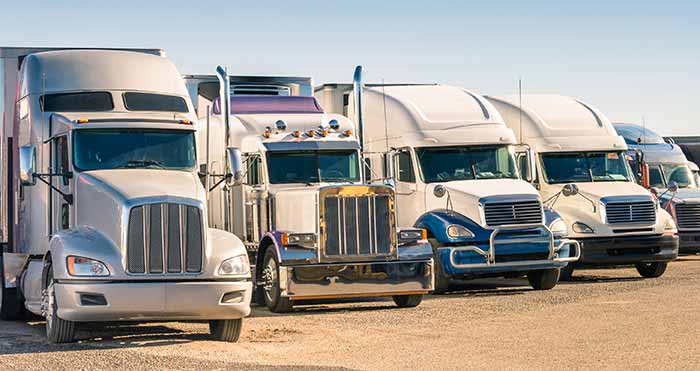
There is much confusion surrounding what is considered a consolidated and deconsolidated shipment. Considering one requires multiple Cargo Control...
Read MoreConsolidated vs. Deconsolidated Shipments
There is much confusion surrounding what is considered a consolidated and deconsolidated shipment. Considering one requires multiple Cargo Control Numbers (CCN) and therefore multiple declarations while the other does not, it's important to understand the difference. So let's first take a look at the definitions of each.
Consolidated Shipment
Canada Border Services Agency (CBSA) considers a consolidated shipment to be a number of separate shipments grouped together by a consolidator or freight forwarder and shipped under one cargo control document.
Deconsolidated Shipment
A deconsolidated shipment is a consolidated shipment that is divided into individual shipments consigned to individual consignees and reported to the CBSA on individual cargo control documents.
Consolidated Shipment Scenario
Consolidated shipments have additional requirements for eManifest submission. Here is a typical consolidation shipment scenario:
- CBSA would expect one eManifest cargo transmission from the highway carrier per single contract of carriage or Bill of Lading (BOL).
- The highway carrier would be required to indicate "yes" for the consolidated freight indicator field of the cargo map within the eManifest. A consolidated freight indicator is an indicator that specifies whether house bill(s) are expected to follow by indicating if the freight is consolidated.
- Electronic house bill submissions that will be further deconsolidated must be identified as "consolidated" in order to ensure the cargo matching the process is complete for authorization to move, release and referral notifications to take place. A house bill close message is required for each cargo document or house bill that includes freight identified as consolidated.
- The CBSA would expect multiple eManifest house bill transmissions from the freight forwarder.
- CBSA would expect freight forwarders to transmit a house bill CLOSE eManifest message once all the house bills within a consolidated shipment have been sent to the CBSA and accepted by the system. For clarity a "house bill close message" is provided by the freight forwarder to identify all house bills to a consolidated primary document or consolidated house bill document for closure purposes.
- Multiple Pre-Arrival Review System (PARS) or other release request types would be submitted by the importer or customs broker, quoting the multiple house bills. This can only be initiated with the arrival of the conveyance in Canada.
- The consignee would be listed as the Canadian freight forwarder or other consolidator who will de-consolidate the cargo(s) in Canada.
- Additionally, entry declarations, or releases, which are submitted by the importer or their customs broker, are required to be linked to the house bills of lading submitted by the freight forwarder and not the primary cargo(s) or CCNs submitted by the highway carrier to report (section 12(1) of the Customs Act) the goods at the First Port of Arrival (FPOA).
5 Frequently Asked Questions About ACI eManifest | Part 1
Consolidated shipments do not require specific commodity descriptions due to multiple cargo descriptions within the house bills attached. Instead a general description can be used such as "freight of all kinds."
Consolidation shipments require the involvement of CBSA registered freight forwarders. These freight forwarders must possess a valid 8000 series Carrier Code. Freight forwarders are not involved in the international movement of freight unless bonded. Freight can not be moved or transported internationally by a freight forwarder, the freight must be transported across the border by a valid CBSA approved highway carrier.
Freight forwarders who are not already registered and participating in electronic house bills should contact the CBSA Technical Commercial Client Unit (TCCU) at [email protected] to register and get a copy of the Electronic Commerce Client Requirements Document (ECCRD) Chapter 5.
Freight forwarders can transmit their data on their own via an EDI transmission option or engage a third party such as our Carrier Assistance Team to transmit their data.

As highway carriers struggle with the challenges presented to their business by ACI emanifest regulations and strive to get compliant, we frequently...
Read MoreAs highway carriers struggle with the challenges presented to their business by ACI emanifest regulations and strive to get compliant, we frequently receive inquiries that need clarification. In the coming weeks, we'll feature five frequently asked questions about ACI eManifest. Jan Brock, recently retired Chief of Commercial Operations with Canada Border Services Agency for the Pacific Highway and Abbotsford Huntingdon districts and now a Senior Trade Advisor with Pacific Customs Brokers (Canada) will answer your questions about ACI emanifests and compliance.
So What Are Highway Carriers' Biggest Questions?
1. Will ACI eManifest Slow Down Processing Times With The Customs Broker?
ACI eManifest will not directly impact customs brokers as their process for entry submission will remain the same. That said, customs brokers will see an increase in volume as CBSA will no longer be accepting multiple shipments on one entry.
2. Do I Need To File An eManifest For An Empty Truck or Trailer?
Yes, with the exception of Customs Self Assessment (CSA) carriers, you must file an eManifest ?Conveyance Report? when driving an empty truck or pulling an empty trailer. Bobtail tractors (commercial motor vehicle not attached to a trailer) are exempt.
3. What Happens If I Arrive At The Border Without First Filing an eManifest?
From July 10, 2015 to January 10, 2016 carriers who do not comply with eManifest requirements may be issued zero-rated penalties (non-monetary) under the CBSA's Administrative Monetary Penalty System (AMPS).
Beginning January 10, 2016 carriers who do not comply with eManifest requirements will be issued monetary AMPS penalties. Your goods will not be allowed to proceed past the FPOA without an eManifest submission.
4. What Are My After-Hours eManifest Submission Options For Trucks That Get Loaded Outside Of Office Hours?
When it comes to ACI eManifest submissions, there are no after hours. ACI eManifest can be transmitted 24 hours a day, 365 days of the year. If you normally self-file ACI eManifest and are unable to do so outside of regular business hours, you may utilize a third-party service provider such as our Carrier Assistance who is ALWAYS OPEN.
5. How Do I File eManifest Correctly?
Attend one of our upcoming ACI eManifest Seminars and Webinars this fall to learn how to correctly file eManifest. In these 90-minute sessions we will answer questions, offer practical solutions and help with the ACI eManifest regulations in effect. For details and to register »
5 Frequently Asked Questions About ACI eManifest | Part 1
5 Frequently Asked Questions About ACI eManifest | Part 2

The CBSA officer will continue to stamp individual PARS at the request of the carrier.
Read MoreAs highway carriers struggle with the challenges presented to their business by ACI emanifest regulations and strive to get compliant, we frequently receive inquiries that need clarification. In the coming weeks, we'll feature five frequently asked questions about ACI eManifest. Jan Brock, recently retired Chief of Commercial Operations with Canada Border Services Agency for the Pacific Highway and Abbotsford Huntingdon districts and now a Senior Trade Advisor with Pacific Customs Brokers (Canada) will answer your questions about ACI emanifests and compliance.
So What Are Highway Carriers' Biggest Questions?
1. Do I Still Have To Get My Individual PARS Stamped?
The CBSA officer will continue to stamp individual PARS at the request of the carrier. As the stamp on the lead sheet only represents "proof of report" carriers that are not RNS participants may want to continue to get individual PARS stamped as proof of release.
2. Does ACI eManifest Replace A8A Cargo Control Documents?
No, ACI eManifest has not replaced the A8A cargo control document requirements. Carriers must still submit an A8A when moving shipments in-bond from the FPOA to an inland destination.
There are also some shipments that are subject to exceptional processing such as Temporary Admission permits (E29B and ATA Carnets, Orders in Council (OIC) and personal goods. Although these exceptional processes still require advance cargo and conveyance data to be transmitted, a paper manifest must also be provided for acquittal purposes.
3. Can I Use Someone Else's Carrier Code?
Yes and no. You can report cargo using someone else's carrier code but the conveyance report must be filed using the carrier code of the carrier that is the owner of the conveyance carrying the goods across the border into Canada. If you do not currently have a carrier code, you will need to apply for one ASAP.
Learn More: ACI eManifest: Proof Of Report And Proof Of Release - Know The Difference
4. Can I Still Move Shipments In Bond?
Yes. For goods that move in-bond, the CBSA port of destination and CBSA sub-location warehouse code associated with that inland port must be provided electronically in advance. The warehouse operator at the destination warehouse must be a Release Notification System (RNS) participant. They will be required to acknowledge receipt of the freight by transmitting an electronic arrival message to the CBSA. When the CBSA has released the shipment, the carrier will receive an RNS message (if they are a RNS participant).
5. How Can I Learn More About ACI eManifest?
Many highway carriers and importers have found our ACI eManifest Seminars and Webinars to be very informative and helpful. In these 90-minute sessions we answer questions, offer practical solutions and help with the ACI eManifest regulations in effect. For details and to register »
5 Frequently Asked Questions About ACI eManifest | Part 1
5 Frequently Asked Questions About ACI eManifest | Part 3

Carriers are now required to electronically transmit cargo and conveyance data to CBSA for all shipments entering Canada.
Read MoreAs highway carriers struggle with the challenges presented to their business by ACI eManifest regulations and strive to get compliant, we frequently receive inquiries that need clarification. In the coming weeks, we'll feature five frequently asked questions about ACI eManifest. Jan Brock, recently retired Chief of Commercial Operations with Canada Border Services Agency for the Pacific Highway and Abbotsford Huntingdon districts and now a Senior Trade Advisor with Pacific Customs Brokers (Canada) will answer your questions about ACI emanifests and compliance.
So What Are Highway Carriers' Biggest Questions?
1. How Will The ACI eManifest Program Work?
Carriers are now required to electronically transmit cargo and conveyance data to CBSA for all shipments entering Canada. Submissions must be received and validated by the CBSA as early as 30 days in advance but no later than one hour before arrival at the First Port of Arrival (FPOA). All mandatory data elements and conditional elements where applicable must be included in submissions. (See Chapter 4: Electronic Commerce Client Requirements Document ECCRD). A machine-readable barcode must be presented to the Border Services Officer (BSO) at the FPOA. The barcode must either be the Conveyance Reference Number (CRN) or Cargo Control Number (CCN) associated to the trip. If the CCN is provided, the CRN must be hand-written on a document and provided to the BSO.
Carriers have a variety of submission options including utilizing a third-party service provider such as Border Pro for Carriers for eManifest filing services, or CBSA's ACI eManifest portal.
2. Who Has To Provide An eManifest?
With some exceptions, carriers for hire who are transporting commercial goods into Canada, or returning to Canada empty are required to file ACI eManifest.
3. What Is A Conveyance Reference Number?
The first four digits of the Conveyance Reference Number (CRN) must be the carrier code representing the carrier that is physically transporting the goods to Canada and reporting the goods at the First Port of Arrival (FPOA). This statutory obligation cannot be shifted from one carrier to another. The carrier code of the carrier transporting the goods must always be represented in the CRN, regardless of which party transmitted the related cargo data.
4. What Commodities Are Exempt From eManifest Requirements?
At this point, no specific products have been exempted from eManifest requirements. The ACI/eManifest Highway Electronic Commerce Client Requirements Document does provide info on exceptions and exemptions to eManifest filing requirements.
For a list of exceptions and exemptions from the eManifest program, consult the CBSA Electronic Commerce Client Requirements Document - Chapter 4: Advance Commercial Information.
5. Do We Have To Set Up A New eManifest For Every Customs Broker?
No, the ACI eManifest program is not customs broker specific. You are required to transmit advance cargo and conveyance information for each shipment transported into Canada by truck or rail car. These shipments could all be offered for release to CBSA by the same customs broker or by a combination of customs brokers.
Learn more about ACI eManifest
Attend one of our upcoming 90-minute sessions (seminar or webinar) and learn more about ACI eManifest. We will answer your eManifest related questions, offer practical solutions and help you comply with this regulation that is now in effect. For details and to register »
5 Frequently Asked Questions About ACI eManifest | Part 2
5 Frequently Asked Questions About ACI eManifest | Part 3

With the holidays quickly approaching, it is not surprising to see surging demand driving up freight rates in ocean and air modes of transportation due to capacity constraints. This is now snowballing into all other modes with chassis shortages, and available warehouse space nowhere to be found. Many shippers and freight managers are getting inventive with shipping lanes, temporarily importing goods into Canada or the US where they have secured vessel capacity, or switching modes to get their hands on whatever space they can find, no matter the cost. With giant buyers such as HomeDepot and Walmart buying out entire vessels just to get their store shelves filled, what’s a smaller shipper to do? In this blog, we will look at some insider tips and recommendations on how to navigate this shipping crisis.
Read MoreWith the holidays quickly approaching, it is not surprising to see surging demand driving up freight rates in ocean and air modes of transportation due to capacity constraints. This is now snowballing into all other modes with chassis shortages, and available warehouse space nowhere to be found. Many shippers and freight managers are getting inventive with shipping lanes, temporarily importing goods into Canada or the US where they have secured vessel capacity, or switching modes to get their hands on whatever space they can find, no matter the cost. With giant buyers such as HomeDepot and Walmart chartering entire vessels just to get their store shelves filled, what’s a smaller shipper to do? In this blog, we will look at some insider tips and recommendations on how to navigate this shipping crisis.
Tip 1: Switch From Ocean To Air
If you are purchasing finished goods or raw materials in small quantities from overseas and need to secure space, switch to air transport.
Here is what one of our ocean freight representatives suggests:
“We usually recommend using air freight to transport very small parcels, high-value products, limited shelf life products or shipments with deadlines with no buffer. However, there is no competitive advantage from a cost perspective other than the transit time. Since serious delays in ports have had a negative effect on ship schedules, we have been introducing the air freight option to our customers more.”
Air freight rates are expected to increase significantly as many more shippers make the switch from ocean freight; therefore, it’s a good idea to budget for this expense.
Air rates are currently quite high from China, Australia and New Zealand as the container congestion in those ports has caused a large influx on the air freight from those countries. Airlines are increasing the rates 50-75% above normal. With peak season fast approaching the rates are certainly not going to ease anytime soon.
Europe rates are starting to ease back down. They are approx 20-25% higher than normal but they have dropped in the last 30 days.
Here is what one of our air freight representatives suggests:
“What we would say to all customers is if you need something quick or even partial shipments, move by air freight and the balance, move by ocean if you can afford to wait for the shipments by sea.”
Tip 2: Look For Alternative Sources
If you are sourcing your goods from overseas, and are finding it challenging to find cost-effective shipping options, perhaps look for an alternative supplier south of the US.
A recent study produced by Auburn University’s Center for Supply Chain Innovation, and release at the Council of Supply Chain Management Professionals (CSCMP) EDGE conference, companies are looking to prioritize supply chain stability. It seems as though the current shipping crisis has wreaked enough havoc for companies to look at investing in new supplier partnerships, enhancing current relationships, staff and managing overall risk while optimizing supply-chain costs. (source)
Here is what one of our air freight representatives find:
“Air rates from Mexico and South America are quite a bit lower and clients may want to purchase goods from there if possible.”
An additional benefit of purchasing goods from Mexico to be imported in the US or Canada is the reduction of elimination of import duties with the use of the US-Canada-Mexico Free Trade Agreement known to each country as USMCA/CUSMA/T-MEC respectively.
A customs broker can help you determine your overall import costs of purchasing from a foreign supplier, including considerations for FTA use, protective taxes and surcharges and quota requirements.
Need help understanding landed costs of imported goods? We can help. Speak to a Trade Advisor.
Tip 3: Get Your Carriers Bonded
One of the trickle-down effects of the container crisis is the effect felt in North American ports and the ground transport carriers that work them. Dozens of vessels are stacking up outside of ports in the US and Canada waiting for available space to offload. Warehouses are so full that they are turning away storage requests for damaged containers. However, with a shortage of equipment, warehouse space and drivers, space is limited and containers are sitting. Additionally, goods intended for overseas buyers are also stuck. Shippers are scrambling to find available space in vessels leaving North America, which is causing them to think outside the box and look to move their shipments inbound through Canada or vice versa when available space in foreign ports comes available.
However, if you have successfully found space on a vessel out of North America, and then found a free chassis, only to be stopped in your tracks because you can’t find a bonded carrier, we can help.
Bonded Carrier Vs. Non-Bonded Carrier
Here is what one of our ground freight representatives suggest:
“We are helping many clients move their goods out of the US and into Canada, using a bonded carrier to move it, in order to reach a vessel in Canada with available space. Because we are both a customs broker and freight manager, we are able to offer unbonded carriers single trip bonds, find a bonded carrier OR, help the client get their chosen Carrier bonded.”
Single-trip Bonds: An Alternative for Non-Bonded Carriers
This is a relatively painless process:
- If the goods were made in the US, an Automated Export System (AES) export filing will need to be made before leaving the US.
- The bonded carrier will then request an A8A bond to allow the goods to travel through Canada to their exit destination without having to import them.
- The shipping line will cancel the A8A.
- No CERS will be required out of Canada.
As you can see, you have options. Speaking with a customs broker can help you determine costs in alternative sources and a Freight Manager can help you find inventive ways to get your goods from point A to point B.

A driver's cross border journey is so much more than picking up freight and proceeding with delivery. Crossing international borders, especially with …
Read MoreA driver's cross border journey is so much more than picking up freight and proceeding with delivery. Crossing international borders, especially with commercial freight, means complying with the rules of the governing country.
There are many aspects for the carrier to consider when planning their journey: transportation permits, routes, road conditions, hours and what customs requirements apply to the goods on board.
While most entries must be transmitted to the CBSA electronically for review, there are a number of exceptions to this rule. Here is a list of those exceptions to help give you a better understanding of some of the reasons you or your driver may have to stop your journey along the way:
- Invoice lines in excess of 999 lines - When an invoice covers a large number of purchased goods, it can take a customs broker quite some time to key it line by line. This is why customs has allowed entries exceeding 250 lines to be presented as a paper entry to help expedite the clearance process.
- Multiple Highway Cargo Control numbers at frontier
- Courier Low Value Shipment rejected from consist ($2500 CAD or less)
- Other government department permit or certificate required - There are certain goods that cannot be released electronically because they require a permit, certificate or license to be presented to CBSA. An example of this would be vehicles that require Form 1 or fire arms that require a special permit.
- System outage (ie. customs broker, CBSA or CFIA)
- Shortages, Entered to Arrive, Value Included - These goods are reported when the quantity of goods originally reported to the CBSA is different from that received by the importer or broker.
- Provisional - When the importer/owner or broker cannot establish a final value for duty of goods at the time of importation. In such cases, goods may be released under the interim accounting provisions.
- Prime & ETAs - When an item is too large to fit on one truck and transportation of the goods will be split up onto a number of trucks.
- Used self propelled vehicles - Goods that require U.S .customs authorization to export before they will be CBSA released.
- Used machinery requiring inspection - Goods that may have soil or dirt present must be inspected to ensure that the proper cleaning precautions have been taken.
- CBSA has requested to see a paper declaration
In any of the above cases, the customs broker will instruct you or your driver to come into their office to collect a paper package, which they will have prepared in advance. After obtaining instruction from the customs broker, you will proceed to the customs booth and advise the border service officer (BSO) that you need to see your customs broker. The border service officer will instruct you where to park while you take care of your documentation.
Once you've visited the customs broker and have obtained the paper package, those documents need to be presented to CBSA for their release decision. If release has been granted, Customs will stamp your paperwork released and you may then proceed with final delivery.
Do your due diligence and always ensure that your entries are good to go before proceeding to the border. By doing this, it gives you and the customs broker an opportunity to communicate any special instructions to each other.
ACI eManifest: Common Carrier Questions 4 Months In
Why Carriers Care About The eManifest Cargo Report And Bill Of Lading Matching