


Blog Articles

China is known as the world's largest exporter of manufactured consumer products. Many commercial entrepreneurs import consumer products from China benefiting from lower prices. Global Affairs Canada reports that “China is Canada’s second most important bilateral commercial partner.” (Source) The US is number 1. If you are considering importing products from China, take the time to research the import and manufacturing process before you commit. Here are some considerations.
Read MoreChina is known as the world's largest exporter of manufactured consumer products. Many commercial entrepreneurs import consumer products from China benefiting from lower prices. Global Affairs Canada reports that “China is Canada’s second most important bilateral commercial partner.” (Source) The US is number 1. If you are considering importing products from China, take the time to research the import and manufacturing process before you commit. Here are some considerations.
Does The Product Meet All The Health And Safety Requirements In The Destination Country?
What certifications and/or barriers are applied to the product in the country you intend to market the product? For Canada, does the product meet all the requirements of the Canada Consumer Product Safety Act? Does it meet all the health and safety regulations of all provincial and/or federal agencies? Are all labelling and marking regulations met? Ensure that the product does not contain any dangerous or harmful ingredients or parts. Verify the raw materials that are used to manufacture your product. Are the components safe and of good quality? Ask a lot of questions. Is the manufacturer or supplier aware of the Canadian safety regulations? Ensure you consistently communicate the standards you require to import this product. It helps to get samples to test the quality. If you can, visit the manufacturer or hire someone to do this on your behalf. It may be cost effective to have your shipment inspected prior to shipping. There is an added cost to this but it may be worthwhile until you develop a trust with your manufacturer.
Ensure The Product Is Protected By Patents, Trademarks Or Intellectual Property Rights
You should ensure that you not only have protection in Canada but ensure you also have it in China.
The Canadian Intellectual Property Office of Canada states:
“A Canadian patent, trademark or industrial design does not secure your rights outside of Canada. You should consider obtaining IP protection in the countries where you plan on doing business, including selling products over the internet and/or manufacturing products overseas.” (Source)
Choose A Reliable Vendor, Supplier And/Or Manufacturer
Compare and check price and quality amongst vendors for the same product. Research your manufacturer/supplier. Are they capable? Are they reliable? Learn the manufacturing process in China. There are risks with the quality and safety of the products coming out of China. Be specific about your requirements. Get everything agreed upon in writing. Get written contracts and ensure you get legal advice on the terms and conditions. As mentioned earlier, if possible visit your manufacturer or hire someone to do so.
A freight management company like ours can help consolidate multiple orders from various suppliers in China resulting in cost savings.
4 Ways To Perform Supply Chain Due Diligence
Choose A Reliable And Cost Effective Means Of Shipping The Product
Research the cost and time for delivery. Is the shipping time and cost reasonable and reliable for your business.There are various shipping methods available. The method you choose will generally depend upon the size, weight, volume and packaging of your product. A Freight Manager can help you make these decisions.
The fastest method is express mail by courier. This method generally takes 1-4 days. This method can be reasonably priced but depends on the size of shipment. Small lightweight products cater to this method. Small e-commerce businesses generally rely on this type of carrier.
Air freight is the next fastest and generally takes 5-10 days. Air Cargo rates can be costly but the shipment delivery is generally pretty reliable. Air Cargo is not really feasible for large products. E-commerce businesses also tend to use this method.
Sea or Ocean Freight caters to larger and heavier products and voluminous shipments. This method takes 14-37 days. Ocean rates are generally pretty reasonable but unfortunately have doubled and tripled due to pandemic related delays and closures. Hopefully as the world progresses through the pandemic these prices will move downwards.
A Beginner’s Guide To Ocean Freight Container Shipping
Check the Incoterms® regarding insurance or coverage for lost and/or damaged goods. Choose the most advantageous to you. Get freight insurance if your shipment is not covered in Incoterms®.
What Is Freight Insurance And What Do Your Freight Insurance Rates Cover?
Ensure You Understand All The Import And Export Requirements That CBSA Or The Customs Officials Of China Require Of You
Ensure you are knowledgeable regarding all the required documentation that customs and other agencies require for the importation of your product. Your documentation must be complete and correct. Research the costs for duty and tax.
It is wise at this point to consider using a customs broker to assist you with the export and import process so that unforeseen delays can be avoided.
Do the homework before you commit to importing from China. We can assist with all your import and shipping queries. Contact one of our trade advisors.


Amazon started as a small online book store that grew into the billion dollar business it is today. Although Amazon may be a unicorn when it comes to sales growth, every small online retailer hopes for just a sliver of that success when they build their business plans. If you are one of those entrepreneurs, one factor to keep in mind is scalability. You may be a small importer now, but what happens when your goods start selling in large quantities? Ensuring your supply chains and import processes are agile in terms of volume is imperative. In this blog we will share 4 tips on how to ensure optimal logistics scalability for your ecommerce business.
Read MoreMany companies started as small online stores that grew into very successful businesses. Although some of these may be unicorns when it comes to sales growth, every small online retailer hopes for just a sliver such success when they build their business plans. If you are one of those entrepreneurs, one factor to keep in mind is scalability. You may be a small importer now, but what happens when your goods start selling in large quantities? Ensuring your supply chains and import processes are agile in terms of volume is imperative. In this blog, we will share 4 tips on how to ensure optimal logistics scalability for your ecommerce business.
The consumer of today has grown used to shopping on ecommerce sites for some if not all their needs. Ecommerce has made it easier for consumers to shop around and find the right product at the right price without leaving their home. Consumers want speed and the best value for their money. Ecommerce retailers must ensure that their shipment is timely and cost efficient or they will lose their customer in the blink of an eye.
The ecommerce world is very competitive and a customer can be literally a click away from becoming your customer or moving on to someone else. At the same time, you as the retailer, while growing your business must be cost efficient and effective and one of the management requirements of a successful ecommerce business is to have in place a good manager of your cross border trade requirements.
Choose Logistics Providers That Can Pivot
Shipping and order fulfillment is a core element of customer service which if not done well will cost you loyalty and reputation. As you scale your ecommerce business you are going to enter into new markets in different locations meaning that you will need a reliable logistics partner for efficient shipping.
Choosing a Freight Manager experienced in shipping worldwide can be a beneficial resource for you. They will help you map out your supply chain and take away the burden of organizing your multi-model shipping needs. Freight managers are different from freight forwarders in that they participate in the overall management of shipping and logistics. Shipping, pick and pack and warehousing can all be organized by a Freight Manager. They will take these duties off your hands so you can focus on running and growing the business.
Freight Managers differ from single mode asset based carriers in that the Freight Manager works with a large network of carriers in all modes of transportation (highway, rail, air, ocean, courier). This allows for agility as your business grows. Changes to shipping lanes and modes of transport are easily adjustable when working with a Freight Manager who has an expansive, global network of carriers to choose from.
Prepare For Duties And Tax
If your market is international you will need to manage the collection of duties and taxes and the many regulations surrounding the import of products in and out of the US or Canada.
If you sell products in Canada, you are responsible for paying any applicable taxes and importing duties before the product can be sold to a Canadian resident or stored in a fulfillment center. You or your designated agent must act as the Importer of Record and be reported as such on customs declarations.
Want to import into Canada but you're not a resident? Learn more about the Non-Resident Importer Program.
Most imported goods into Canada are subject to a 5% federal tax known as the Goods and Services Tax (GST). If duty is applicable, it is added to the value of the goods and the GST will apply on the duty-paid value of the shipment (i.e. 5% GST x (value of goods + duty paid). It is your responsibility to comply with all Canadian customs and taxation laws and regulations, including applicable duty and tax requirements.
Consider A Customs Broker That Offers Courier Services Over a Courier That Offers Customs Brokerage Services.
Many small businesses rely on courier companies to get their goods from point A to point B as it provides the most cost effective shipping option for small shipments. If crossing international borders, the payment of Customs duties and taxes is typically wrapped into the bill for this shipping service or if under a certain value, not applicable.
Courier transport can be fast and efficient, but caution is advised when using their “all-inclusive” customs brokerage services. Couriers transport large volumes of shipments across the border. Any advantages you may gain in freight rates or speed of service can be very quickly wiped out by costly tariff errors that are usually not identified until there is a customs post-release verification audit. In addition, when you use a courier to ship small expedited parcels for your company whether they charge or offer free customs brokerage equates to using multiple brokers. The perils of using more than one customs broker was explained in our blog The Downside of Using Multiple Customs Brokers.
However, many countries including the US and Canada offer courier company specialized import processes that limit the need for formal declarations with Customs provided they are not on a list of regulated products and under a certain dollar value (de minimis).
CUSMA Or USMCA | Everything You Need To Know About The New NAFTA - Part 3
Once the value of the shipment exceeds a certain value, a formal entry will be required. Therefore, when setting up your import accounts into Canada or the US it’s a good idea to think BIG and open an account with a Customs Broker who provides courier shipping and import services as well as helps you import larger shipments at higher values.
At What Point Should An Ecommerce Entrepreneur Contact A Customs Broker?
The best time to contact a customs broker would be in the planning stages, prior to entering into international contracts. The long-term success and growth of your ecommerce business, big or small, depends on the ability to understand and execute cross-border contracts with your suppliers and customers. By getting involved in the early stages, customs brokers may be able to provide advantageous advice on terms, also countries of origin to source from, regulations and prohibitions from participating government agencies, tariff classification and entry types to assist in the decision-making and compliance process so that at the end of the day you are more competitive in the marketplace and gain a more positive relationship with both US Customs and Border Protection and Canada Border Services Agency.
Contact one of our Trade Advisors today to get you started on the right foot.


CB has earned a positive reputation for our handling of produce and perishable product shipments. There is a compelling argument to make that starting in 1954, our business has been built on produce shipments, and our expertise and knowledge in shipping this kind of product have played no small part in our company’s success. With that in mind, today, our aim is to educate new importers on an event that can have a massive impact on your bottom line, particularly if you are in that field - Produce Season.
Read MorePCB has earned a positive reputation for our handling of produce and perishable product shipments. There is a compelling argument to make that starting in 1916, our business has been built on produce shipments, and our expertise and knowledge in shipping this kind of product have played no small part in our company’s success. With that in mind, today, our aim is to educate new importers on an event that can have a massive impact on your bottom line, particularly if you are in that field - Produce Season.
Much like the world at large, when it comes to freight, there are four different ‘seasons’ that run through the calendar year - Holiday, Peak, Quiet, and Produce. These seasons represent the kinds of imports that are most relevant at that point in time, along with recurring global events that can impact the necessary logistics behind them. Today, we are discussing the Produce Season, which runs from roughly March to October. But what is Produce Season, and what can an importer do to most effectively navigate it? Read on as we dive deep into how these seasonal changes impact logistics and what it can mean for you and your business.
What is Produce Season in Logistics?
Beginning in the deep south of the US, warm weather creeps up the continent around March/April, bringing with it growing seasons to more and more farmers. This slow ascent of spring and summer heralds the beginning of what importers know as Produce Season.
As the weather gets warmer, large swaths of farms across the US begin to harvest their first yields. To look at it, it moves like a wave of heat that rises up the continent over the course of months, and all the farms within that band look to ship their produce at functionally the same time, collectively seeking ways to ship that produce to grocery stores across the US and Canada quickly and effectively.
This influx of produce importers are, in general, all seeking the same kind of refrigerated freight transport for their goods, and this simultaneous surge puts a strain on the logistical web that typically makes up transport across the country. There are only so many of the necessary refrigerated vehicles, or ‘reefers’ as they are often referred to, and many of them are booked for this exact reason months in advance. Unsurprisingly, these vehicles are suddenly in high demand, and with that demand, there is a rippling strain on supply chains across the continent.
What Does This Mean For You As an Importer?
It is essential to understand that Produce Season does not just affect produce importers as they work to secure space on reefers. The effect of freight seasonality is not felt in a bubble, and nowhere is that truer than during the Produce Season. Drivers are pulled toward the increased demand and their contractually obligated shipments, and in doing so, they are pulled away from other areas.
The impact of Produce Season on freight shipping cannot be understated, even if you aren’t in the produce shipping business. During this season, it can mean higher rates, reduced capacities, and heightened competition for space on reefer trucks—particularly if you are not a regular importer of perishable goods. Here are a few good practices every commercial importer can adopt to be ready for anything during Produce Season.
Pick Your Moment
The bulk of major produce importers will have secured their space months in advance, but if you are not a regular importer of perishable goods, it may serve you well to wait before attempting to ship your goods. The season doesn’t last forever, and as previously mentioned, costs are going to be high, and space is incredibly limited - particularly if you aren’t a regular produce importer. If your shipment can wait, it makes a lot of sense to wait until the off-season.
Trust Your Broker - Avoid Spoilage
While not entirely tied to Produce Season, importing produce, particularly from the US to Canada, is often a complex affair involving multiple governmental bodies. Admissibility, import requirements, duties, taxes, and a host of other processes must be adhered to, and failure to complete any of the steps required, regardless of the season, will end in potentially lengthy delays at Customs. The last thing you want to have happen is for the produce you fought so hard to get here to spoil due to a delay at the border. At PCB, freight management and brokerage walk hand in hand, and as mentioned, we have built our reputation on produce and perishable goods. In no other industry is speed and coordination so important, and with PCB, both the compliance and the freight management are down the hall from each other.
Make Friends with Your Freight Managers and Carriers All Year
You may be an importer that only needs to ship during Produce Season, but doing business and maintaining a good relationship with your friendly freight management team all year round can go a long way to ensuring they have your best interest at the top of mind when Produce Season arrives. After all, it’s knowledgeable people working behind the screens and phones, and it’s human nature for them to aid those people with whom they already have a good business relationship. Produce Season is an excellent time to harvest the relationship you’ve cultivated all year.
Produce season can be a time of significant stress for importers and carriers of all shapes, sizes, and industries. It is a phenomenon that stretches across the US and Canada and often represents a kind of speed bump or litmus test for a business or driver’s ability to plan ahead and capitalize on opportunity.
PCB’s freight management team has been helping importers with Produce Seasons for many years, so if you have any questions, concerns, or queries about shipping during this often frantic time, please don’t hesitate to get in touch with our team today. We can’t wait to hear from you!


E-commerce has revolutionized consumer habits. Years ago I use to travel to the mall to try on shoes. Now I order loafers by the dozen. I try them all on and return the ones that do not fit. I demand that they come the next day so I can wear them to my friend’s wedding. Wash, rinse, repeat for all my online purchases.
Read MoreE-Commerce Consumer Habits
E-commerce has revolutionized consumer habits. Years ago I use to travel to the mall to try on shoes. Now I order loafers by the dozen. I try them all on and return the ones that do not fit. I demand that they come the next day so I can wear them to my friend’s wedding. Wash, rinse, repeat for all my online purchases. Instead of trekking 30 to 60 minutes to a local specialty store, I can read an endless supply of reviews online letting me know what is the best value for my dollar. I can then order the product and know what to expect thanks to a couple of helpful and like-minded consumers. The benefits and perks are too good as a consumer. Never has it been easier to get the products you want as quickly you want them. E-commerce success stems from the innovative problem solving skills of freight forwarders and logistic providers. The reason many people like shopping online is because of how quickly products arrive at their doorsteps. Immediacy is what keeps people coming back, and word of mouth travels fast when a consumer is happy.
Air Freight
Business-to-business air shipments have been commonplace for years. However, with the change in consumer habits, business-to-consumer air shipments are becoming more commonplace. E-commerce truly encourages international trade. The main benefit of air freight is speed. If you want a product now, just like I wanted my loafers for my friend’s wedding, you can get it now. The biggest detractor for air freight is the cost. I will be able to get those loafers in 48 hours, but it will cost me an extra few pennies.
Ocean Freight
Let’s say my friend’s wedding is not until next summer. Now I have some time to breathe. I look around for some shoes, but the best loafer is still overseas. I can still get the loafer’s but I will have to wait a few weeks. Ocean freight still allows for international purchases, you are just going to have to wait a little bit longer for your international selection.
Ground Freight
With e-commerce a heavy majority of shipments are still delivered by truck. What is worrisome for the ground freight industry is the supply of trucks and drivers. The increase in consumers wanting instant delivery on e-commerce shipments has caused a surge in demand. Supply is having a tough time keeping up. Because the demand for delivery has increased faster than supply can maintain, there is a major shortage of drivers on the horizon. The shortage of drivers will cause an increase in ground freight costs.
Rail Freight
The trade-off between rail freight and ground freight is the same as the trade-off between air freight and ocean freight. Rail is less expensive than ground, but it will take longer for your goods to arrive by rail than it will take to arrive by ground. The motto in logistics is know before you go. As an e-commerce seller or consumer it is important to know all of the costs associated with your shipments, as well as the time it will take for your shipment to arrive.
Freight Forwarding Assistance
If you need assistance with any freight forwarding or customs clearance on your e-commerce shipments feel free to contact us to talk with an experienced freight forwarder or an expert trade advisor.

Shippers want two things; freight cost certainty and service reliability. However, when shippers suspect their contracted rates are higher than the market level, they push more of their freight in the spot market. Indeed, deregulation and rate volatility has driven many shippers to play in the spot market far more than they should.
Read MoreSurcharge Pricing Announcement
Last week’s announcement of an Emergency Bunker Surcharge from several major ocean carriers should give shippers who put most of their freight business in the spot market enough reason to reflect on their pricing strategy. Usually, emergency surcharges are implemented with only 15 days notice and can be applied at any time. There have been many types of emergency surcharges over the past 20 years, which were fully applied to the spot market and not to shippers under contract, or in a worst case scenario applied at a discount after negotiation between the two parties.
Deregulation Drives Shippers To Spot Market Freight
Shippers want two things; freight cost certainty and service reliability. However, when shippers suspect their contracted rates are higher than the market level, they push more of their freight in the spot market. Indeed, deregulation and rate volatility has driven many shippers to play in the spot market far more than they should. Playing the spot market takes time. Comparison of services, origin charges and supplier relationships are only a few factors that make continuously negotiating rates a full time job. Most shippers are systems driven and are required to load new vendor pricing into their database. A real pain if it is a monthly exercise. So what is the most effective strategy? How can a shipper have the benefit of market level pricing, service reliability and medium term cost certainty?
Successful Shipping Strategy
Depending on their volume, many successful shippers will contract a large portion (70-75%) of their freight once a year. The remainder will be made available to the spot market if and when it makes economic sense to the shipper. By committing a large part of their volume to one or two service providers, shippers get the benefit of more favorable pricing and services with economy of scale. Moreover, if there is a space crunch, the shipper with the service provider they have been supporting will have an advantage over the shipper who continuously moves business from one carrier to the next over price. Conversely, by keeping a portion of their freight in the spot market, shippers are able to keep an eye on the market. If freight rates soften, they can take advantage of the dip by pushing volume to their spot carriers. If price rise, they can try to get more freight booked with their contracted carriers.
Freight Rate Landscape
The world is adapting to the deregulated environment where freight rates are entirely driven by supply and demand. Global demand growth has been relatively steady at 5-6% per year. Volatility in pricing has been driven almost entirely on the supply side. Carriers can remove tonnage from a trade, thereby driving freight rates up, or they can add tonnage which of course lead to some dramatic price reductions. Emergency surcharges such as the bunker fuel surcharge announced last week are typically strategies used by carriers to recover costs without increasing freight levels. While the 75/25 contract/spot formula may not fit with all shippers, good freight partners can map out a strategy tailored to their business needs.
You Are In Good Hands
You are in good hands with the experts at PCB Freight Management. Click the button below to request a quote for all of your logistics and customs brokerage needs.

The most common question you ask our freight managers is how can I reduce produce spoilage? What are the steps I can take? Where can I make any gains? There are three areas in which produce spoilage can be reduced.
Read MoreNew Regulations Affecting Your Imports
The most common question you ask our freight managers is how can I reduce produce spoilage? What are the steps I can take? Where can I make any gains? There are three areas in which produce spoilage can be reduced.
1. Utilize A Cold Supply Chain
Ensuring your produce is in a temperature controlled environment throughout the supply chain will make a big difference in its life cycle. From farm to table, the number of hand-offs from grower, to distributor, to carrier, can each impact spoilage. One hour in a hot van can make spinach seem lifeless and unusable. The supplier should have pre-cooling systems. The freight provider must utilize temperature controlled vans, rail cars, and cargo containers. All of these precautions are critical, and that includes warehouses which offer cold storage as well.
2. Choose Carriers Wisely
A carrier with proper equipment makes all the difference. Either single or team drivers can be used to reflect the correct transit times that the shelf life dictates. The shorter the shelf life, the more important the transit times. A highway carriers genset temperature controlled van is reliant on fuel levels and a temperature setting monitored by the driver. Monitor the carrier's activities from pre-loading, ensuring the equipment is pre-cooled and set at the correct temperatures before arrival at the warehouses for loading are all essential actions to take with perishable produce.
3. Ensure Appointments Are Booked And Met
With as many moving parts as there are in logistics, it is very easy to forget to book an appointment for pickup or delivery. With the current climate of highway carriers mandated Electronic Logging Devices (ELDs) limiting the number of hours they can idle while waiting to get loaded, unloaded, drive, work, etc., and congestion at the port, arriving without an appointment or missing the time slot can have massive repercussions. Once the appointment is booked, supply chain managers should regularly check in with their drivers to ensure they are on schedule to meet that appointment time slot, and make the necessary adjustment if they are not. Making sure all appointment times are in place and adhered to by the carriers is a small act, but makes a big difference in spoilage. Although these steps may seem simple, not taking them can trip up even the most organized and prepared supply chain manager. We have heard from countless clients who have run into difficulties in these areas and look to freight managers for long-term solutions. PCB Freight Management has the tools in place to ensure a smooth, cold storage transition from grower to seller.
You Can Reduce Produce Spoilage
If you need help with clearing produce shipments into Canada or the U.S. please contact our sister company, PCB Customs Brokers. If you want to take the steps to reduce produce spoilage click on the button below to get started with PCB Freight Management.

Strict ocean freight carrier policies in effect today are born from monumental and sometimes dangerous mistakes from the past.
Read MoreStrict ocean freight carrier policies in effect today are born from monumental and sometimes dangerous mistakes from the past.
Verified Gross Mass Policy
A great example is the Verified Gross Mass (VGM) policy. Ocean freight carriers require all containers to have their weights verified prior to loading any vessel. This applies to all ports worldwide. Certain ports have their own policies stating they will not accept any containers without the VGM data. Shippers have two options. One, weigh the containers on their premises, prior to and after loading. Or two, have the loaded containers verified at a certified scale before returning to the terminal. This increases the costs of each additional container move, as well at time. The questions is, how did the ocean freight industry get to the point where strict policies are the norm? The answer lies in the old adage those who do not learn from history, are destined to repeat it.
How The Ocean Freight Industry Learned From The Past
Once upon a time, the rate for ocean freight commodities (lumber, metal scrap, waste paper, etc.) were rated by weight, usually metric tonne. There was little incentive to misidentify weights since carriers charged by what was loaded into the shipping container. To prevent shippers from loading one or two metric tonnes into a container and shipping a full box at a reduced rate, carriers charged a minimum tonnage on each box (i.e. 21 revenue tonnes). It did not take long for shippers to declare exactly 21 metric tonnes on all shipments irrespective of the real weight in the actual container. In the early 90s the inevitable happened in the port of Vancouver. A container of green lumber declared at 21 metric tonnes had the floor fall out when it was being loaded onto the ship. Fortunately, no one was hurt, but the terminal shut down operations and refused to load the remainder of the ship until all weights were verified from each shipper. The ship cut and run without the rest of the load causing a stir among the ocean freight community.

The Short Term Solution
After the incident an investigation was held to determine how it could be prevented going forward. The carrier decided to arbitrarily stop offering rates by metric tonne and began pricing on a per container basis, thereby eliminating the incentive to cheat on weight. Other carriers followed suit and the problem was solved. At least that was the general opinion of the industry leaders at the time. Unfortunately, as time would tell, they made a poor decision. Due to the advances in container structure and the use of alloys, new and advanced containers allowed for greater weights in the same sized box. As a result, shippers pushed the limits and inevitably more boxes were involved in accidents. Some with catastrophic results.
Yesterday’s Mistakes Save Lives Today
In 2016, the International Marine Organization (IMO) amended the Safety of Life at Sea (SOLAS) rules to include stricter enforcement of VGM. This not only eliminated the risks of carrying overloaded containers, but it also set the bar higher creating standards and an overdue discipline that was greatly needed in the ocean freight industry. It is safe to say the mistakes of the past created a precedence for carriers to make the necessary changes to potentially save many lives today and in the future.
You Have A Helping Hand
If you need help moving freight by ocean, air, highway or rail, PCB Freight Management can help provide you with excellent service from our logistics experts. Contact us today for a quote on your next freight shipment.
With the current requirements for electronic reporting by carriers entering Canada and the United States through the Advance Commercial Information (A …
Read MoreWith the current requirements for electronic reporting by carriers entering Canada and the United States through the Advance Commercial Information (ACI) and ACE programs, it will become more readily apparent to Canada Border Services Agency (CBSA) and U.S. Customs and Border Protection (CBP) if pickups and deliveries have violated the Rules of Cabotage.
ACI eManifest Implementation Updates - Now What?
What Is Cabotage?
Canada Border Services Agency (CBSA) defines cabotage as the practice of point-to-point movement of domestic goods within Canada by foreign-based conveyances and operators.
How Does This Affect You As A Carrier?
Under the ACI and ACE programs, all carriers "For Hire" who engage in cross-border transportation will be required to provide conveyance information on all movements. This will provide CBSA and CBP with electronic data on all equipment entering their respective countries.
How Can A Carrier Stay Compliant?
Carriers have the responsibility to:
- Understand regulations regarding cabotage,
- Know what constitutes a permissible incidental or re-positioning move, and
- Ensure that they are in compliance


In a situation where a commodity is invoiced as a single transaction and it is an over-sized shipment such as a large building and or machinery that cannot …
Read MoreIn a situation where a commodity is invoiced as a single transaction and it is an over-sized shipment such as a large building and or machinery that cannot physically be moved on one truck, Canada Border Services Agency (CBSA) has a provision to handle multi-load moves with one invoice value. The industry terminology for this type of special entry is a Prime and Entered to Arrive (ETA) entry.
In these cases, the entire quantity of goods will be accounted for when the first shipment arrives, and the remainder will be processed as a paper release package for each load to follow. This means drivers carrying any parts or components for goods previously accounted for on one invoice will need to clear Customs against the original declaration previously provided to CBSA at the same port of entry as approved.
Step 1: Prepare The Required Carrier Documentation.
Each driver should have:
- a bill of lading and
- a packing list indicating all goods on board
These documents should be noted with a specific reference number being used to identify the original entry. Common examples would be the serial number, unit number, VIN number, PO number, Shippers number or any other number that is unique to the complete commodity.
In addition, the driver should note which load number they are of the total number of trucks needed to complete the delivery. For example: load 3 of 12.
The Importance Of A Bill Of Lading | Part 1
Step 2: Inform Your Customs Broker.
Next step is to notify your customs broker of your intent to cross the border. Indicate the
- Port (this can only be a CBSA listed port on the CBSA approval form)
- Estimated time of arrival (ETA) and
- Phone number for the driver in the event the driver needs to be reached
Ensure that the same cargo control number that was used for the cargo transmission of the ACI eManifest is provided to your customs broker.
Have Components On Board For More Than One Prime Entry Or Have Extra Parts That Are Not For A Prime Entry?
In this case, the driver will need to generate for each list of items that will be specific to each prime entry:
- separate bill of lading (BOL),
- separate packing list and
- separate CCN
for each list of items that will be specific to each prime entry.
Extra parts shipped with an Entered to Arrive (ETA) load that are not a part of an original transaction will also require a separate BOL, packing list, Canada Customs or commercial invoice indicating all information required for Customs and a separate CCN.
Note:
- Drivers generally will not be provided any "invoices" for their load because the master invoice for the complete transaction would have already been declared to CBSA. More than likely, the driver will have a packing list, BOL, indication of what unit they have parts for, load number and CCN number. If the drivers have parts for more than one unit, they need to provide a separate list.
- ACI eManifest compliant carriers will still be required to electronically file cargo and conveyance data one hour prior to arrival at the first port of entry.
6 Steps To Submitting Documentation To Your Customs Broker

Whether you are a first time importer, or a well-seasoned company, the current shipping crisis has started a cascade effect in escalating costs. These extra fees are being absorbed throughout the supply chain, but the mode feeling the heaviest burden is Ocean Transportation. Traditionally, ocean transport and shipping lines are the most dependable, cost effective means of moving large quantities of goods throughout the world. The rise of economies in Asia has been built on manufacturing and delivering goods for an insatiable North American market. The shipping lines and supply chains already under strain due to volume and lack of infrastructure capable of handling the rising demand have started to buckle under the extra weight of a global pandemic (not to mention certain boats getting stuck in certain canals). This has caused stakeholders from steamship lines, logistics companies, and carriers to significantly raise rates and to create new auxiliary charges. The party responsible for those additional transport costs depends entirely on the Incoterm® that were decided upon at time of creating the purchase order.
Read MoreWhether you are a first time importer, or a well-seasoned company, the current shipping crisis has started a cascade effect in escalating costs. These extra fees are being absorbed throughout the supply chain, but the mode feeling the heaviest burden is Ocean Transportation. Traditionally, ocean transport and shipping lines are the most dependable, cost effective means of moving large quantities of goods throughout the world. The rise of economies in Asia has been built on manufacturing and delivering goods for an insatiable North American market. The shipping lines and supply chains already under strain due to volume and lack of infrastructure capable of handling the rising demand have started to buckle under the extra weight of a global pandemic (not to mention certain boats getting stuck in certain canals). This has caused stakeholders from steamship lines, logistics companies, and carriers to significantly raise rates and to create new auxiliary charges. The party responsible for those additional transport costs depends entirely on the Incoterm® that were decided upon at time of creating the purchase order.
A Beginner’s Guide To Ocean Freight Container Shipping
What are Incoterms® ?
The Incoterm® rules are an internationally recognized standard and are used worldwide in international and domestic contracts for the sale of goods. First published in 1936, Incoterm® rules provide internationally accepted definitions and rules of interpretation for most common commercial terms of sale. It is the terms of sale that will clearly state the party who is responsible for the cargo at every step of its journey.
Incoterms® With Full Containers (FCL) And Less Than Container Loads (LCL)
During this time of uncertainty ensuring the use of an Incoterm® that leaves responsibility with the Seller as long as possible can be in the best interest of Canadian importers.

For example, if the Incoterm® that is decided upon falls under Group C, E, F for a full container load (FCL), then any charges related to delivering the cargo to the consignee AND return of the empty container are the responsibility of the buyer (importer). These charges can include fees relating to:
- Port appointment reservation
- Port congestion
- Port storage
- Handling (if there is a freight forwarder involved)
- Drayage (local delivery to destination and empty container return)
- Steamship detention/demurrage at destination port. Empty containers return to the location chosen by the steamship line
- Due to congestion there can be delays in returning the empty container
- Steamship lines will NOT waive any demurrage incurred due to the chosen empty return location being unable to accept any further containers
- Carriers that have been contracted for the drayage will also charge a Chassis rental fee for every day the empty container is unable to be returned as this ties up that chassis from accepting new drayage orders
- Block stow charges are applicable when a container is on the port buried under other containers and inaccessible
3 Tips To Help Navigate The Current Shipping Nightmare
Less than Container Load (LCL) shipments would still be subject to the above charges, but they would be shared with all the shipments in the container. These shipments always have a freight forwarder involved as part of the consolidation process and would include the charges with their handling invoice. Additional fees would also be owing to the bonded warehouse that your LCL container is delivered to for destuffing. This is also the location that the Customs Clearance will most likely take place. Dock Fees start at a minimum of $45.00 CAD and go up depending on the weight of the shipment. Some warehouses will calculate on Cubic Meters (CBM) of space and not net weight. These fees can be included in the handling fees that your Freight Forwarder has invoiced to you, but always read the fine print to make sure this is not another charge that needs to be paid before the shipment is able to be picked up from the warehouse.
A key to arranging the ocean import of a shipment is to be fully informed of all the different points that the responsibility of the cargo can be transferred to the importer (Buyer) and to ensure that the Incoterm® that is used is done knowing the inherent risks. An Incoterm® that leaves responsibility with the vendor (Seller) longer may cost more upfront than a term that transfers earlier, but if there are delivery issues that incur additional charges those fees stay with the responsible party.
It is vital to understand that any additional fees relating to the customs clearance will always remain with the Importer of Record, which can include demurrage fees with the steamship line (FCL) or storage at the warehouse (LCL).
Buckle Up: Air Freight Rates Are Skyrocketing
Customs Exams Also Play A Factor
As an importer you need to be aware that any shipment that comes in can be subject to exam by CBSA. Containers are selected for exams through algorithms that CBSA has put in place to help identify risks and keep Canadians safe.
While the majority of examinations are random, there are factors that can increase your container's chance of being flagged for a CBSA exam that can add to the probability such as:
- Importing regulated products
- Importing for a Country of origin/export that is carefully watched
- Purchases from exporters that are carefully watched
Also, if you are a first time ocean importer, a newly incorporated business, or using a new supplier your chances of having (at minimum) a dockside exam is quite high.
How Much Does A Customs Exam Cost?
In terms of costs, customs exams on FCL can range from $500 for a dockside exam to $3,000 to $7,000 for a container to be fully destuffed at a special exam facility.
Now if the same situation happens and your shipment that has been flagged by customs is a LCL, the exam itself would not happen until the container has been checked into the bonded warehouse, unloaded, and your shipment has been confirmed as “arrived” to CBSA. So all that is remaining for CBSA to complete is the visual inspection, which can result in exam fees under $500 CAD. Unless there is an inspection issue, which is a whole other set of considerations.
There is nothing to prevent CBSA from detaining a shipment for an exam at any point once it has entered Canada. This means there is still the possibility that the container that your LCL shipment is consigned to will be flagged for the full container to be moved for destuff and inspection. In these instances, the $3,000 to $7,000 CAD for CBSA exam fees would be divided amongst all importers in the examined container generally by the cubic meters (CBM).
As you can see, there is more to ocean importing than meets the eye, and the shipping crisis is aggravating the situation. Be sure to understand the terms of sale or Incoterms® and what you may or may not be responsible for. Also prepare for customs examination costs that could play a role in your overall landed costs.

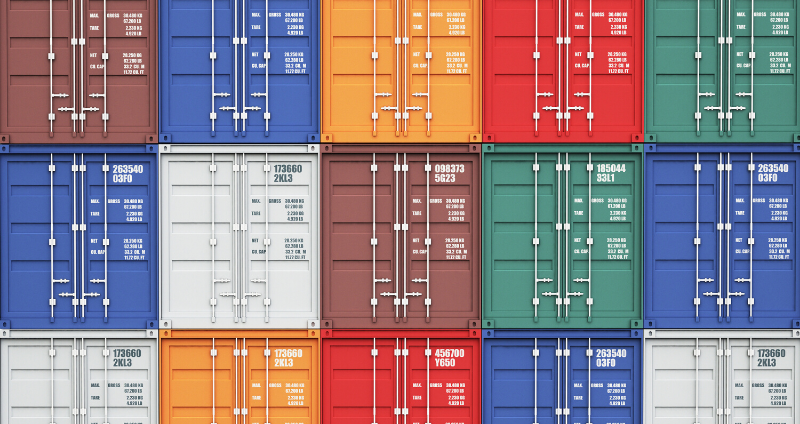
It’s not a worldwide container shortage that is causing ocean rates to increase. It’s the uneven distribution of containers. There are enough containers, just not in the places where they are needed.
Read MoreIt’s not a worldwide container shortage that is causing ocean rates to increase. It’s the uneven distribution of containers. There are enough containers, just not in the places where they are needed.
North American ports and container yards are stacked to the brim with empty containers desperately needed in Asia and Europe. As a result, container supply is severely limited with demand driving inflation of ocean transportation rates to unprecedented levels. This is spilling over into other modes, driving up demand in an already stretched capacity. Keep reading to learn more about how we got here and tips on what you can do to alleviate some of the impacts on your business.
How Did The Container Shortage Happen?
The COVID pandemic.
The global pandemic was first felt overseas in Asia, shutting down production as areas went into lockdown in an effort to curb the spread. Many factories closed temporarily and many containers were parked at ports. Shipping lines reduced capacity. Empty containers in North America were not sent back overseas.
As Asia and Europe emerged from lockdown and industries began ramping up production to meet the unprecedented demand for products, North America was locking down. The empty containers were not reloaded at the same rate as full containers were arriving.
All of this resulted in too many empty containers in North America, and not enough in Asia and Europe.
The Container Shortage Effect On Rates
This imbalance has caused a sharp increase in costs.
A full container load rate from Asia to the West Coast has seen a 400% increase in recent months. Adding insult to injury, at that rate, clients may not even be able to secure a space on the vessel as they may be outbid.
The Container Shortage Effect On Air and Ground Modes Of Transportation
Shippers have turned to air transportation where possible. This increase in demand is also driving up rates in this mode. However, air capacity is restricted alongside travel restrictions.
Commercial cargo can often be loaded into passenger planes. But with so few people traveling, there are far fewer opportunities to do this.
Ground carriers have also been impacted. Trucking companies have long since been facing an impending driver shortage as the existing driver pool reached retirement age, and are exiting the workforce. With no equalizing influx of drivers, ground freight rates began to rise.
With ground freight capacity already limited, chassis shortages in Southern California, and the container shortage is exacerbating port congestion throughout North America.
What’s An Importer To Do?
Unfortunately, smaller volume clients are going to feel the effects of this shortage the hardest. Large volume clients will have the ability to “pay to play” bidding their way to space on the vessel. Until containers are once again evenly distributed, this problem will persist.
Although there is very little that can be done, we have a few tips that may help:
- Work with a freight manager: Working with a freight manager is a bit like working with a mortgage broker vs individual banks. We are looking for ALL available opportunities to get your product where it needs to be, not just with one or two carriers. With our vast international agency network we are able to draw on the strengths of our partners. We can also look at all modes of transport including consolidation.
- Book early: The sooner you inform your Freight Manager about your need for space the better. We recommend currently booking your cargo at least 4 weeks before departure.
- Mitigate your risk: Purchase Cargo Insurance to provide physical loss/damage coverage of your goods. Ensure your goods are properly packaged and meet industry standards for shipping.
- Brace for a continuance until 2022: This is not forever, but it is for the foreseeable future. Review your increased costs against your future selling price.


By spreading their ocean freight shipments over several ports, the company reduced dwell time risks, not only limited to recurring labor issues, but also due to congestion, rail car shortages, and bad weather.
Read MoreIn March of 2012, a Senior VP of supply chain made his first trip to Vancouver. He appreciated the March break from the East Coast winter. However, his purpose was to find a solution for his shipping problem. He needed to get over 100 40’ containers off of the Vancouver port and to their US destinations.
The Freight Problem
The containers were grounded and stuck due to massive congestion caused by the longshoreman strike affecting the US West Coast ports. Thousands of additional containers were discharged in the ports of Vancouver during the two-week job action, causing the port to become overwhelmed. Eventually, terminals stopped discharging ships to avoid making a bad situation much worse.
The Freight Solution
At the time the executive surmised that moving forward, it would be a good idea for his company to spread their 25,000 plus containers from Asia per year over a greater number of ports. The very next year, in addition to routing over US South and East Coasts, they routed over Vancouver to reach US West Coast and Midwest markets. Transit times were comparable and acceptable.
The Benefits Of Using Multiple Ports
By spreading their ocean freight shipments over several ports, the company reduced dwell time risks, not only limited to recurring labor issues, but also due to congestion, rail car shortages, and bad weather. The greatest risk to any supply chain is having one of the links in the chain cutoff. A port strike, trucker disruption, or rail car shortage can turn into a nightmare for importers potentially costing hundreds of thousands of dollars in lost revenue and contractual fines. By building several and diverse links, you can manage your risk.
PCB Freight Management Can Help
Whether you ship 100 containers each year or 10,000, a well planned multiport strategy will reduce your risk. PCB Freight Management can assist you with all of your freight forwarding needs, including implementing a multiport strategy to mitigate your freight import risk.

Canada Border Services Agency (CBSA) has announced that bonded and non-bonded freight forwarders, who are responsible for consolidated imports are required…
Read MoreCanada Border Services Agency (CBSA) has announced that bonded and non-bonded freight forwarders, who are responsible for consolidated imports are required to transmit advance house bill data electronically for in-bond and in-transit shipments commencing November 7, 2016.
The Implementation Timeline As It Applies To eManifest Requirements For Freight Forwarders Is As Follows:
- November 7, 2016 to January 10, 2017 Transition period during which penalties for non-compliance will not be issued. CBSA will work closely with freight forwarders on corrective measures to become compliant.
- January 11, 2017- July 11, 2017 Non-compliant freight forwarders may be issued zero-rated (non-monetary) penalties under the CBSA Administrative Monetary Penalty System (AMPS).
- July 12, 2017 Freight Forwarders deemed non-compliant may be issued monetary penalties.
CBSA encourages freight forwarders to adopt the eManifest requirements now before they become mandatory. By doing so freight forwarders will have time to adjust to eManifest processes and correct problems effectively reducing the risk of non-compliance.
ACI eManifest Requirements Now Mandatory
Start To Prepare Now:
1. Ensure you have a valid CBSA-issued 8000-series freight forwarder carrier code and that CBSA has your current company contact information. For detailed information on obtaining a carrier code visit the Commercial Carrier section of the CBSA website. Choose a transmission option. Available options included:
- Electronic Data Interchange (EDI)
- Third party service provider (Carrier Services)
- CBSA’s eManifest portal
2. Secure a copy of the technical reference chapter of the Electronic Commerce Client Requirements Document (ECCRD) - Chapter 5 and 8. These chapters provide the business rules and data requirements when transmitting data to CBSA. Contact the CBSA Technical Commercial Client Unit (TCCU) for a copy.
3. Review the tools, resources and client support available on the CBSA website.
Available eManifest Filing Options:
- Full-service filing as primary service provider - For carriers who would prefer Pacific Customs Brokers to file eManifest on their behalf.
- Full-service filing as secondary service provider - A backup option for carriers that are registered with another third party service provider, or who plan to use the CBSA web portal in the event of system failures, power outages, internet connectivity issues, etc.
- Self-filing (partial) - For carriers choosing to enter eManifest data themselves.
Note: Pacific Customs Brokers offers 24/7 carrier support with all of our service options listed above.
We are a third party service provider and know how to be compliant with filing your ACI eManifest. Contact us at 855-542-6644 or click this link.
5 Frequently Asked Questions About ACI eManifest | Part 2


The Advance Commercial Information (ACI) program provides the Canada Border Services Agency (CBSA) with electronic pre-arrival cargo and conveyance information so they can identify health, safety and security threats related to commercial goods before the goods arrive in Canada.
Read MoreACI eManifest - A Quick Recap:
For those of you new to, or unfamiliar with, ACI eManifest, this is how the CBSA summarizes the program. The Advance Commercial Information (ACI) program provides the Canada Border Services Agency (CBSA) with electronic pre-arrival cargo and conveyance information so they can identify health, safety and security threats related to commercial goods before the goods arrive in Canada. With the implementation of eManifest, highway carriers transporting goods into Canada are required to transmit cargo and conveyance data electronically to the CBSA prior to arrival. The cargo and conveyance data must be received and validated by the CBSA a minimum of one hour before the shipment arrives at the border. ACE is the equivalent U.S. program.
Zero-Rated Penalty Phase - Mandatory Compliance
It has been a few months since CBSA announced the implementation of ACI eManifest in the highway mode. We are currently in the zero-rated penalty phase of the ACI eManifest implementation timeline which means that for the period July 10, 2015 to January 10, 2016 non compliant carriers will be issued a penalty but it will be zero-rated or have no financial ramifications to it. These zero-rated penalties serve as a warning to carriers to correct the issue or contravention prior to January 10, 2016, when monetary fines will be attached to those contraventions.
What Is The Administrative Monetary Penalty System?
Let's take a moment to review the CBSA penalty system for non-compliance known as the Administrative Monetary Penalty System or AMPS. AMPS is described by CBSA as a sanction regime that authorizes CBSA to issue civil monetary penalties to carriers, importers and exporters for the violation of the CBSA's trade and border legislation in the commercial stream.
It is intended to level the playing field for all Canadian businesses by incurring a cost for non-compliance. CBSA states, AMPS provides comprehensive penalty coverage for contraventions of the CBSA requirements and obligations and will result in significant overall reduction of the competitive advantage that non-complying clients have over those who have invested in compliance.
AMPS | How Would This Affect Your Bottom Line?
Application Of The AMPS
AMPS contraventions may be applied to all commercial clients including importers, exporters, customs brokers, warehouse and duty free operators, carriers, freight forwarders or or their representatives. The AMPS penalties are applied against the person(company), in response to their non-compliance as opposed to seizures which are applied against the goods. To identify the person or company a client identifier, such as the Canada Revenue Agency issued Business Number (BN) can be used, or the 4 digit CBSA issued carrier code, or the sub-office work location code that identifies the warehouse operator. These identifiers are used in the process of issuing the AMPS penalties.
The AMPS Penalty Framework
The AMPS penalty structure is graduated in most cases providing higher monetary penalties for repeat incidences of the same contravention. For a small number of contraventions, the penalty amount is a flat rate.
CBSA has applied a penalty matrix called the AMPS risk grid which identifies the severity of the impact of the contravention from very low to very high plotted against four criteria:
- National security
- Health and safety
- Economic
- International commitments
This risk criteria ensures the penalty amount is in line with potential harm of non-compliance. eg. clerical error vs. fraud. AMPS penalties are progressive i.e.the first, second and third subsequent occurrences of the same contravention by the same client will receive progressively higher penalty amounts. For contraventions considered high-risk the penalty amounts increase at the second and third levels at higher rates to reflect the severity of the contravention. This translates into a range from $0 at the warning level to $8,000 for repeat offenses of the most serious contraventions. This is applied to each shipment or submission.
30-Day Non-Escalation
CBSA will provide carriers/importers an opportunity to correct non-compliance for low and medium risk contraventions with a 30-day delay to the penalty escalation from level 1 to level 2. The 30 days start from the date of the issuance of the penalty and will not increase to the second level within that 30 days for a second contravention to allow the carriers/importers to take remedial action to prevent having to pay an increased penalty amount.
Contravention Retention Period
The retention period for each individual contravention is either 12 or 36 months for penalty calculation purposes. Contravention retention periods are for the penalty escalation purposes and used to determine when penalties escalate from one level to the next. They are calculated either one year or three years from the date of the last contravention against the client. Once the retention period has expired, and the same contravention occurs again, the system will begin a new retention period and calculate penalty amounts at the first level. Most eManifest contraventions have a one year retention period.
You should be aware that the overall carriers/importers contravention history remains in the AMPS systems for six years plus the current year. Carriers/importers will be given a risk score on their performance assessed against number of contraventions issued and corrections and amendments made with ACI eManifest. Those with higher risk scores will be scrutinized more than those with lower risk scores. This means delays and possible more penalties and enforcement.
How To Appeal An ACI eManifest AMPS Penalty
January 10th, 2016 Penalty Phase Starts
Here are some of the penalties which may be applied against the carrier or client who is non-compliant with ACI eManifest (these monetary fines will be applied in January 2016). Again, these penalties are issued per shipment or per submission of data.
What Carriers And Importers Can Do to avoid AMPS?
While there will be no history of non-compliance retained by the Canada Border Services Agency during the current six-month grace period of zero-rated penalties, now is the time to take the appropriate measures within your company to ensure good compliance protocols so that when the monetary penalties hit in January 2016 your company will avoid the stiff penalties for non-compliance.
A clear understanding of ACI eManifest requirements, comprehensive compliance monitoring and record keeping system will ensure that you avoid monetary penalties and high risk scoring come January 2016.
eManifest Filing Services
Pacific Customs Brokers provides eManifest filing services can assist you in submitting all relevant information to Canada Customs within the required time period to ensure your trucks cross the border as quickly and efficiently as possible.
Source:
Prior to ACI eManifest, a CBSA stamp on a carrier?s PARS document acted as both Proof of Report and Proof of Release. With the implementation of ACI e …
Read MorePrior to ACI eManifest, a CBSA stamp on a carrier's PARS document acted as both Proof of Report and Proof of Release. With the implementation of ACI eManifest, this is no longer the case.
Reporting:
All goods imported or moving in transit through Canada must be reported to Canada Border Services Agency (CBSA) at the First Port of Arrival (FPOA) in Canada. Submission of electronic ACI eManifest data within the prescribed pre-arrival timeframes, when combined with the arrival of conveyance (truck) in Canada satisfies the requirement for Report of Goods as per Section 12.(1) of the Customs Act.
When the truck arrives at the FPOA, the Border Services Officer will arrive the conveyance (truck) in the CBSA system. The CBSA acknowledges the arrival of the conveyance (truck) by sending an electronic notification to the operator of the truck as identified by the CBSA Carrier Code on the Conveyance report or lead sheet submitted by the driver to the Border Services Officer at the FPOA. This electronic message indicates the carrier has met their obligation to report under Section 12(1) of the Customs Act for all shipments (Cargo Control Numbers) detailed on the cargo submissions that are linked to that truck. The Border Services Officer (BSO) will also stamp the conveyance report, commonly referred to as an ACI lead sheet, providing the carrier with physical proof that they have met this obligation.
Release:
Release of goods reported at the FPOA must have a release document submitted by the importer or customs broker to the CBSA at the port which is linked to the CCN reported on the conveyance report. CBSA will transmit notification of release via the Release Notification System (RNS) to participants, indicating whether each shipment has been released. The RNS message is associated to the CCN on the truck. This RNS message is Proof of Release of the goods. CBSA will continue to stamp each individual Cargo Control Document which also represents Proof of Release. This must be at the request of the driver and depending on the number of cargo documents, this may not be done at the primary inspection booth. The driver may be referred inside for this action to occur.
Proof:
CBSA will only accept the following as proof:
Proof Of Report
- Stamped ACI Lead sheet; or
- Section 12(1) report from Portal or Third Party service Provider or EDI.
Proof Of Release
- CBSA stamp on each individual cargo control document; or
- RNS messaging through a 3rd party Service Provider or EDI
ACI eManifest Pre-Arrival Changes And Post Arrival Amendments
We strongly encourage highway carriers that are not participants in the Release Notification System (RNS) to advise their drivers to insist on having each and every PARS stamped at the Canadian border.
Our Border Pro for Carriers eManifest filing services can assist you in submitting all relevant information to Canada Customs within the required time period to ensure your trucks cross the border as quickly and efficiently as possible.
Have questions?
If you have any questions about ACI eManifest, please do not hesitate to contact our Carrier Relations Liaison at 855.542.6644 or via email at [email protected].
Want to learn more about ACI eManifest?
Our ACI eManifest Seminars and Webinars are 90-minute sessions where we answer questions, offer practical solutions and help with the ACI eManifest regulations in effect. For details and to register »

International commerce is governed by a set of terms known as International Commerce Terms, or Incoterms®. Established by the...
Read MoreIn my previous blog post, I reviewed the benefits of drop shipping. As previously noted, with the expansion of global trade it has never been easier to find sources for goods worldwide and then sell directly to your clients. That being said, before you embark on this journey, you will need to know the rules of international commerce. That is where Incoterms® come in.
Incoterms® - International Commercial Terms
International commerce is governed by a set of terms known as International Commerce Terms, or Incoterms®.
Established by the International Chamber of Commerce, the Incoterms® assign responsibilities to both the buyer and the seller throughout the international transaction thereby eliminating uncertainties and avoiding costly misunderstandings by clarifying the tasks, costs and risks involved in delivery of the goods from sellers to buyers.
Originally published in 1936, the latest set came out in September of 2010 and took effect on January 1, 2011.
Benefits Of Incoterms®
- Incoterms® help determine how prices and risks are designated between the importing buyer and the exporting seller with respect to shipping of products.
- It lets shippers take shipment transport cost and risk responsibility in hand when it benefits them most.
- They help improve supply chain performance by avoiding the confusion created by varied interpretations of the rules in different countries.
- The understanding and the proper use of applicable Terms of Sale may make the difference between future success and failure.
- Understanding Incoterms® and their implications to your business transactions is crucial, especially with regard to import or exports of goods.
- You determine your financial and commercial fate when you manage your Terms of Sale.
Responsibilities And Obligations Of A Buyer
To begin with, you will need to determine how involved you want to be in the process of getting the goods from source to destination and how much information you want the seller to see.
Below is a list of terms that provide the least obligation to terms that provide maximum obligation:
1. Delivered Duty Paid (DDP)
Delivered Duty Paid places the entire obligation on the seller to deliver the goods to the final destination. This can be useful if you want to avoid all obligation and are delivering goods to a third party warehouse from where you will fulfill your sales. This term implies that you have no logistics team in place and is not a good model if you intend on having the goods shipped directly to your client as you are essentially handing your supplier a sales lead on a golden platter.
2. Cost, Insurance And Freight (CIF)
This is one of the most commonly used terms. Basically, the seller is responsible to deliver the goods to a named destination port where you will then clear customs and arrange for delivery to your client. Under this term you will need to have a good logistics network in place consisting of a Customs Broker to clear the goods and a local freight forwarder to deliver the goods once they arrive. Since you arrange the details once the goods arrive, you keep the seller at an arm's length from your client.
3. Free On Board (FOB)
Assuming more control and obligation, Free on Board or FOB is a classic maritime trade term where the seller is obligated to deliver the goods cleared for export to the named conveyance of your choosing. In this model you assume the obligation of arranging transport from the foreign port of lading all the way through to the final destination. Under this term you will need a logistics network consisting of an international freight forwarder to arrange the transport and a customs broker to clear the goods once they arrive.
4. Ex Works (EXW)
Maximum obligation comes with the terms of Ex Works, which places full responsibility on the buyer to arrange transport from the seller's premises, clear the goods for export and then clear customs and deliver the goods to the final destination. This is usually used by multi-national companies with many locations and a sophisticated logistics network and not a very good choice for drop shipping.
As you can see there are many choices to consider when negotiating the terms of sale. More obligations also mean more control, so you need to decide how much effort you are willing to spend before you buy. The last equation to figure out is duties, taxes and clearing customs.
In our next blog post we will take a look at Leveraging Free Trade Agreements and Non-Resident Importing in Drop Shipping.
Drop Shipping Part 1 | Maximize The Benefits Of Global Trade
Drop Shipping Part 3 | Leveraging Free Trade Agreements And Non-Resident Importing


In our last blog posts, we discussed the benefits of drop shipping and the responsibilities and obligations of a buyer under the Incoterms®…
Read MoreIn our last blog posts, we discussed the benefits of drop shipping and the responsibilities and obligations of a buyer under the Incoterms®.
Advantages Of Becoming A Drop Shipper
Let's now take a moment and discuss two compelling advantages in becoming a drop shipper.
- Free Trade Agreements
- Non-Resident Importer
1. Free Trade Agreements (FTA)
Free Trade Agreements or FTAs have proven to be one of the best ways to open the world market and increase trade. FTAs allow for preferential duty treatment to items that qualify from certain countries. The North American Free Trade Agreement (NAFTA) for example, consists of the United States, Canada and Mexico and makes up one of the largest trading blocs in the world.
The United States and Canada currently have over 20 Free Trade Agreements in place with various trading partners.
How You Can Benefit From Free Trade Agreements?
FTAs can significantly reduce your landed costs by eliminating duties and taxes.
For example, if you source a product from a country with an FTA and pay no duties or taxes, you now own an advantage over your competition that sources from say, China.
You also benefit by having more than one market to choose from which gives you more flexibility when sourcing products.
In addition to the current FTAs in place, the United States and Canada also offer preferential duty treatment to lesser developed economies under the Generalized System of Preferences (U.S.) and the General Preferential Tariff Regime (Canada), adding hundreds of more sources for international trade.
You are not limited to the company down the street.
2. Non-Resident Importer (NRI)
So now that you have sourced products and found clients to sell the goods to, how will you deal with Customs? The last thing you want is to lose a sale because your client has to deal with customs. The most effective method is to remove Customs from the equation, well at least in the eyes of your client.
How You Can Benefit From Being A Non-Resident Importer?
By acting as the Importer of Record, you can meet all the Customs obligations and have the goods delivered to your client as if they came from right down the street. One of the benefits of NAFTA is that you can act as the importer even if you are not physically in the country you are importing to. Customs recognizes this as a Non-Resident Importer, or the NRI.
Let's say that you reside in Canada and have sourced product from Singapore to be delivered to a client in the United States and you have purchased the goods under Cost, Insurance and Freight (CIF) Incoterms®. Since the seller is obligated to deliver the goods to the port of destination of your choice, you would simply coordinate with your customs broker to clear the goods on your behalf and since the U.S. has a free trade agreement with Singapore you also benefit from duty free treatment on the items.
Becoming a Non-Resident Importer and benefiting from free trade agreements is an efficient way to join the global marketplace and benefit from global commerce.
The Final Advice On Drop Shipping
Remember, the world is your oyster. You just need to make sure you have the right customs broker in place.
Drop Shipping Part 1 | Maximize The Benefits Of Global Trade
Drop Shipping Part 2 | Using Incoterms To Your Benefit


The rise of ecommerce and the ever growing demand for products has shaped how goods are being treated from manufacturer to consumer. Less and less we rely on brick and mortar retail stores. Now there has been a shift to purchase your goods online and have them delivered straight to your doorstep.
Read MoreWarehouse Supply vs. Ecommerce Demand
The rise of ecommerce and the ever growing demand for products has shaped how goods are being treated from manufacturer to consumer. Less and less we rely on brick and mortar retail stores. Now there has been a shift to purchase your goods online and have them delivered straight to your doorstep. This has caused a change in how people are doing business and why we are moving towards a balanced equilibrium of warehouse supply and consumer demand. Recently stories have surfaced about how the supply for U.S. warehouse space is decreasing. This is good news since warehouse supply has always been greater than consumer demand. In fact, 2018 marks the least amount of empty warehouse space since the year 2000.
Capitalizing On Warehouse Space
Anytime warehouse space is becoming available businesses are capitalizing on the opportunity to use their space. The problem some people are projecting is the demand for products is increasing at a faster rate than the amount of supply available. However, the good news is industrial warehouse space is simple to build, therefore too much demand will only lead to an influx in industrial production. This change affects business owners the most because they have to decide whether to continue with traditional retail or move to a more modern online purchasing model where industrial warehouse space is at a premium. Business owners have to weigh the costs and benefits associated with both methods to see if one favors the other, or decide on a healthy balance between traditional brick and mortar as well as industrial warehouse space.
PCB Freight Management Can Assist You
When deciding on Freight services it is important to understand the flow of your goods from start to finish. Whether you need assistance shipping your products by air, ocean, highway or rail, PCB Freight Management has the experts who can organize your shipment and get your goods to their destination with care. Please contact us for all of your freight forwarding, warehousing and customs brokerage needs.

In his book, The World Is Flat, noted 21st century author and journalist, Thomas Friedman analyzes the world as a global marketplace where the same op …
Read MoreIn his book, The World Is Flat, noted 21st century author and journalist, Thomas Friedman analyzes the world as a global marketplace where the same opportunities exist for everyone in international commerce. In other words, the world is now a level playing field.
Rather than undoing years of history lessons and everything we learned about Columbus, let us think of the world as our oyster instead. The expression 'the world is one's oyster' means that the world is yours and all opportunities are open to you.
Take global trade for example. With today's technology we can conduct business from anywhere in the world, with any part of the world. Want coffee beans from Brazil? Italian shoes? Furniture from Malaysia? Simply search online to find a source. For today's tech-savvy business person, finding a source for goods and clients to sell those goods to, has never been easier. That's where drop shipping comes into play.
What Is Drop Shipping?
Drop shipping is a supply chain technique in which the seller has no inventory. Orders are fulfilled directly from a third party such as a:
- Manufacturer
- Wholesaler or
- Warehouse
Due to the increase in offshore manufacturing and advancements in third-party logistics (3PL), you are no longer limited to the company down the street. Global trade is now accessible to everyone.
Benefits Of Drop Shipping
Having no physical inventory means:
- Lower overhead
- You do not have to handle the goods
- You do not have to manage a warehouse
- And most importantly - you do not have open a retail location
You simply buy and sell the goods.
Why Is Drop Shipping A Good Business Model?
Drop shipping enables you to:
- Maximize your economies of scale
- Consolidate orders thereby avoiding minimum order amounts
- Avoid excess inventory when trends or market tastes change
- Add new products quickly and efficiently without substantial investment
- Create a positive cash flow - for example, you take an order from a client, collect the funds up front and then pay the supplier via credit terms or a credit card.
- Benefit from better shipping rates combined with lower damage as the goods are handled less
Convenience And Practicality Of Drop Shipping
- You hold no inventory so you do not have to package and ship the goods
- You do not have to worry about the export regulations of the country you are purchasing from
- You can sell all over the world and offer a wide variety of products
What Are You Responsible For?
In our next blog post we will take a look at 'International Commercial Terms', commonly referred to as Incoterms®. International Commercial Terms govern the rules of commerce transactions and detail each parties actual responsibilities.
Drop Shipping Part 2 | Using Incoterms To Your Benefit
Drop Shipping Part 3 | Leveraging Free Trade Agreements And Non-Resident Importing

Everyone has a do it yourself disaster story. Most of them involve home renovations, and like most people, I have my fair share. They usually begin with…
Read MoreEveryone has a do it yourself disaster story. Most of them involve home renovations, and like most people, I have my fair share. They usually begin with getting a quote from a professional then deciding it's way too expensive and that I can easily do the project myself and save a few bucks in the process. So off I go to the home improvement store where I purchase the needed materials and some shiny new tools. After that, things generally start moving downhill at a fairly rapid pace and quickly descend into profanity laced, tool throwing debacles that leave me broken, bloody and standing in a pile of rubble that started out as expensive building material. It's right about then that I start wishing that I had hired a pro.
I see similar scenarios unfold every day as people try to save money on supply chain logistics. I've seen people spend two hours in a border lineup and two more hours flailing about at customs trying to classify their goods and complete an entry - all in an effort to save $75. I've seen people package their own fragile items or load their own container - only to have everything arrive at destination damaged. I've seen people try to coordinate their own international air freight shipment - only to have things delayed to the point that they don't arrive when needed and accrue high storage charges. Now I'm not much better at math than I am at carpentry, but that just doesn't add up.
10 Questions To Ask When Selecting A Customs Broker
As with everything, hiring a professional does come with a cost. However, if that cost buys you the peace of mind that your product will arrive in a timely manner and in one piece, is that not a price worth paying? So often, people fail to take into account the value of their own time as well as the costs incurred when things do go wrong. Not to mention the negative impact on their credibility and reputation in the marketplace caused by failure to perform.
The people that you employ to handle your international shipping needs are professionals with many years of training and experience. They have encountered and worked through every possible challenge. Letting them do what they do best, frees you up to run your business and do what you do best.
In the end, the decision as to whether to do it yourself or hire a professional rests solely with you. Just be sure to weigh all of the pros and cons and be sure to give careful consideration to factors like the value of your time and the intangible costs incurred when things do go wrong.
If you are looking for professionals to help with your next project, be sure to explore Pacific Customs Brokers' customized logistics solutions. To learn how we can help you, speak with one of our logistics specialists today.
6 Factors To Consider When Choosing A Customs Broker


If you spend enough time in the transportation business, you will see just about everything - including packaging that wouldn't adequately protect...
Read MoreIf you spend enough time in the transportation business, you will see just about everything - including packaging that wouldn't adequately protect cargo for a trip around the block, never mind a trip around the world. It's actually quite astonishing the lack of value that some companies place on packaging.
It's not uncommon to see equipment that is worth tens of thousands of dollars being shipped using twenty dollars worth of packaging materials. These shippers are really taking a chance. The first criteria that a carrier will consider when investigating the validity of a freight claim, is to whether the cargo was properly packaged.
Insufficient packaging equals no freight claim! The leading reason for the declination of a freight claim is poor packaging. Even if your claim is paid, do you really want to go through the hassle? Your client has to wait to get their product, you have to re-fill and re-ship the order - essentially, you are doing twice the work for one sale. This is never a good thing, but in today's economic climate, it's definitely an unattractive prospect. It's much easier to take a little extra time and money when packaging your product, than to go through the pain of filing that claim.
Surprise! Unexpected Costs To Plan For When Importing Into Canada
What Constitutes Proper Packaging?
That depends on what you're shipping. If you're sending a box of screws across town, you can probably throw them in a cardboard box, slap some tape on it, maybe some plastic or metal banding to help hold it together (if the weight is excessive) and you're good to go. If you're shipping an expensive piece of medical research equipment half way around the world and you want it to arrive intact, don't cheap out on the packaging.
While it's difficult to address how to package all types of products in this kind of forum, we strongly recommend using ISPM 15 compliant pallets and lumber, and securing your cargo to the pallets using bolts, screws or strapping. Cartons on pallets should be shrink-wrapped tightly to avoid shifting in transit. Pallets should be stacked high enough to maximize shipping capacity but not so high that the cartons on the bottom will be compromised. Depending upon the value and sensitivity of your product, it may be appropriate to use additional padding, vapour barrier, shock sensors or “tip and tell” indicators. You know your product better than anyone and know what it can and cannot withstand. When it comes to packaging, it's far better to overdo it than to skimp.
One of the main things to remember is that your cargo is probably going to move around a lot more than you expect. Think about how much your sunglasses slide around on the dashboard of your car. Now think about your expensive product hurtling along a curvy and potholed highway, or being tossed around during gale force winds in the middle of the ocean, or just being handled repeatedly as it makes its way from your dock to your client. All of this takes a toll on the packaging and that packaging has to be solid enough to do its job — or you could find yourself out of one.
Wood Packaging Materials | 5 Tips To Avoid Shipment Refusal

In a situation where a commodity is invoiced as a single transaction and it is an oversize shipment such as: a large building and or machinery that cannot …
Read MoreIn a situation where a commodity is invoiced as a single transaction and it is an oversize shipment such as: a large building and or machinery that cannot physically be moved on one truck, Canada Border Services Agency has a provision to handle multi-load moves with one invoice value. The industry terminology for this type of special entry is a Prime and Entered to Arrive (ETA) entry. In these cases, the entire quantity of goods will be accounted for when the first shipment arrives, and the remainder will be processed as paper release package for each load to follow.
This means drivers carrying any parts or components for goods previously accounted for on one invoice will need to clear Customs against the original declaration previously provided to CBSA at the same port of entry as approved.
Carrier Documentation Requirements:
Each driver should then have a bill of lading and a packing list indicating all goods on board. These documents should be noted with a specific reference number being used to identify the original entry. Common examples would be the serial#, Unit#, VIN#, PO#, Shippers# or any other number that is unique to the complete commodity.
In addition, the driver should note which load number they are of the total number of trucks needed to complete the delivery. For example: load 3 of 12.
Next step is to notify the customs broker of your intent to cross the border. Indicate the PORT (which can only be the CBSA port listed on the CBSA approval form), estimated time of arrival (ETA) and phone number for the driver in the event the driver needs to be reached. If a cargo control number (CCN) has not been provided, please ensure that the driver is aware of the carriers "carrier code", as a manifest will be required upon arrival. Charges to generate a cargo control number/barcode for the driver may apply if not previously provided.
Why Carriers Care About The eManifest Cargo Report And Bill Of Lading Matching
Do you have components on board for more than one prime entry OR extra parts not for a prime entry?
If so, the driver will need to generate a SEPARATE bill of lading (BOL), separate packing list & separate CCN for each list of items that will be specific to each prime entry.
Extra parts shipped with an ETA load that are not a part of an original transaction will also require a separate BOL, packing list, Canada Customs or commercial invoice indicating all information required for Customs & separate CCN.
Comments:
Please note that drivers generally will not be provided any "invoices" for their load because the master invoice for the complete transaction would have already been declared to CBSA More than likely, the driver will have a packing list, BOL, indication of what unit they have parts for, load# & CCN#. If the drivers have parts for more than one unit, they need to provide a separate list. For more information on this blog, please feel free to contact the carrier help desk at 855.542.6644 or email [email protected].
ACI eManifest: Proof Of Report And Proof Of Release - Know The Difference


Have you ever asked yourself why you choose Delivered Duty Paid (DDP Incoterms ®) for your international business? Many companies choose international terms of sale based on their company philosophy, history, costs, seller options or perceived ease of transaction. Without knowing the options beyond Incoterms DDP; a company could be losing control of their shipments and increasing their costs dramatically. The solution is to understand all Incoterms®; the responsibility involved, and to select the most advantageous term for your business strategy.
Read MoreOutsourcing Your Transportation And Customs Control
Have you ever asked yourself why you choose Delivered Duty Paid (DDP Incoterms ®) for your international business? Many companies choose international terms of sale based on their company philosophy, history, costs, seller options or perceived ease of transaction. Without knowing the options beyond Incoterms DDP; a company could be losing control of their shipments and increasing their costs dramatically. The solution is to understand all Incoterms®; the responsibility involved, and to select the most advantageous term for your business strategy.
DDP Incoterms®
Incoterms® DDP being an example, are terms that are agreed upon during the negotiation of a contract or sale and deal exclusively with;
- The obligation of buyers and sellers (with regard to each of the 13 stages involved in the transport and clearance of a shipment - see Incoterms® guide), and
- The stipulations on which party bears the risk of loss during transit.

Additional Information
- The purpose of these terms are to provide a set of international rules for the interpretation of the most commonly used trade terms.
- The parties to the transaction select the Incoterms®, which determines who pays the cost of each transportation segment.
- Incoterms® influence customs valuation of imported merchandise. Certain costs within the supply chain may or may not be included in the value for Customs, depending on the term selected.
It is important that your buyers understand and select terms of sale that are in the best interest of your company. The best time to determine the chosen one is when the buyer is evaluating whether or not to move forward with the purchase. Decisions made after the fact will inevitably affect the initial price that was being considered.
Delivered Duty Paid
This commonly used term places the maximum obligations on the seller and minimum obligations on the buyer.The seller is responsible for delivering the goods to the named place, in the country of the buyer, and pays all costs and risks in bringing the goods to the destination, including, import duties and taxes. Risk transfers from seller to buyer when the goods are made available to the buyer, ready for unloading from the arriving conveyance.
Buyer Advantages
- Lower risk, as the seller assumes all responsibilities and charges to the destination. However, risk is not gone!
- Landed cost is known at the time of purchase.
- No administrative supply chain management, arrangement of vendors or payment of such charges.
Buyer Disadvantages
- Can not be used if the seller is unable to obtain import licenses, permits or certain payment options with Canada Customs. Some taxes such as GST are only payable by registered business entities, so there may be no mechanism for the seller to make payment.
- No control over the movement or importation of the goods.
- No direct contacts to track a shipment other than through your vendor.
- No ability to interject in the event of an issue.
- Hidden transport and import costs may lie in the markup calculated by the seller.
An Alternative To DDP: FCA - Free Carrier
This commonly used term places the maximum obligations on the buyer and minimum obligations on the seller.The buyer is now responsible for delivering the goods to their intended destination, and pays all costs and risks in bringing the goods to the destination, including, import duties and taxes.The seller hands over the goods, cleared for export, into the disposal of the first carrier (named by the buyer) at the named place. The seller pays for carriage to the named point of delivery, and risk passes when the goods are handed over to the first carrier
Buyer Advantages
- Control over the movement or importation of the goods.
- Direct contacts to track a shipment.
- Ability to interject in the event of an issue.
- No hidden transport and import costs.
Buyer Disadvantages
- Administrative resources to liaise with service provider.
Always review and consider terms of sale proposed for use in a new contractual agreement to ensure they are consistent with your business plan. Ask for advice from your customs broker or freight forwarder, as often times they can recommend advantageous terms of sale.


Risk, Responsibility and Rewards - How The CIF Incoterms ® rule delivers and what it covers in greater detail: In order to better reflect modern comme …
Read MoreHow The CIF Incoterms ® Rule Delivers
In order to better reflect modern commercial reality, the ICC created a new classification system for Incoterms and abolished the previous classification system which was based on the first letter of the Incoterm rule. Under Incoterms 2010, the ICC has divided the Incoterms in accordance with the means of transportation as follows:
Rules for any Mode or Modes of Transport: EXW, FCA, CPT, CIP, DAT, DAP, DDP
Rules for Sea and Inland Waterway Transport: FAS, FOB, CFR and CIF
CIF Incoterms ®
In our series on the importance of understanding and leveraging Incoterms® 2010, we take a deeper and more detailed look into the Cost Insurance Freight (CIF) Incoterm and the impacts negotiated, as well as often overlooked during the establishment of project viability or business case development for capital projects that are going to be requiring international sales contracts to fulfill their mandates.
First we review what CIF Incoterm is as defined by the International Chamber of Commerce (ICC): CIF is recommended for use with non-containerized sea freight.
CIF Definition: CIF, or "cost, insurance and freight", is a term used in international contracts for the sale of goods being shipped by sea to a port of destination where the seller pays the cost of the insurance and transport of the goods to the destination, and provides the buyer with the documents necessary to obtain the goods from the carrier. Legal delivery occurs when the goods cross the ship's rail in the port of shipment (where they are being shipped FROM).
Insurance Charges
Under CIF, the seller is required to obtain insurance only for minimum coverage. If the buyer wants more comprehensive insurance, they must ensure that the seller is contractually obliged to do so within their contract.
Insurance coverage for goods during shipment:
Freight insurance can be purchased directly from a shipper or from a third-party insurer. also called cargo insurance.
Cargo Insurance Types
Insurers offer two basic types of ocean cargo insurance policies. A voyage policy is used when insuring a single voyage, sometimes referred to as a "stray risk" or "trip risk." Voyage policies are used primarily to cover shipments made by infrequent shippers. The other basic type of policy is the open cargo policy.
Motor Truck Cargo insurance (Cargo) provides insurance on the freight or commodity hauled by a For-hire trucker. It covers your liability for cargo that is lost or damaged due to causes such as fire, collision, or striking of a load.
Marine Insurance
Marine insurance covers the loss or damage of ships, cargo, terminals, and any transport or cargo by which property is transferred, acquired, or held between the points of origin and final destination.
Cargo Management Charges
Stevedoring Charges
Stevedoring is the process of loading and unloading ships. The main sectors of stevedoring are container terminal operations - the loading and discharge of container vessels at terminal ports, largely using advanced mechanical technology. Stevedoring charges are the charges incurred for unloading the goods from ship hold to wharf. These charges are treated as forming part of the freight and are to be added to the value for the purpose of charging duty on imported goods. This contingency arises only when the carrier does not include these charges in the Freight Bill.
Wharfage Charges
A charge assessed by a shipping terminal or port when goods are moved through the location. Wharfage is one of the costs of transport goods within the distribution system used by a business to bring its goods to market.
Terminal Handling Charges
Terminal Handling Charges (THC) or Container Service Charges (CSC) are essentially charges on top of the sea freight, collected by shipping lines to recover from the shippers the cost of paying the container terminals or mid stream operators for the loading or unloading of the containers, and other related costs borne by the shipping lines at the port of shipment or destination terminal before being loaded onboard a vessel.
Container Freight Station Charges
Container Freight Station (CFS) is the term used at the loading port and means the location designated by carriers for the receiving of cargo to be loaded into containers by the carrier. At discharge or destination ports, the term CFS means the bonded location designated by carriers for devanning of containerized cargo.
Entry Of Goods Valuation And Charges
Entry costs and their determination are also a part of negotiating the international sales contract under CIF. You may wonder how Incoterms selection impact the landed entry costs, it is often overlooked that the Incoterms define where the responsibility for costs rests within the contract covering all of the aspects mentioned above and in certain circumstances there may also be packaging requirements for containers where inspection is required for example.
It is often overlooked that inspection for customs or quality control / delivery inspections incur a cost of service that needs to be considered in the overall costing process.
What Is Included In CIF Value?
For the purpose of customs valuation, the CIF value is the price paid for the goods plus the cost of transportation, loading, unloading, handling, insurance, and associated costs incidental to delivery of the goods from the port or place of export in the country of export to the port or place of import in the country.
Assessable Value
Assessable value is a very broad term and complicated, it means the total end assessed value upon which various duties and taxes are levied . The Assessable value is calculated based on various factors/valuation rules mentioned in the Excise Act/Rules as per the Import or Export country.
Use Case Scenario
For our case study purpose, below is an example of an international sales contract announced by Northern Minerals Ltd. where CIF was selected from the 2010 Incoterms to guide the pricing, risk and responsibility for this agreement where they are leveraging CIF to determine clarity on costs for their sales agreement:
Northern Minerals Ltd. (ASX:NTU) announced that it has entered into a sales agreement with Lianyugang Zeyu New Materials Sales Co. Ltd. (JFMAG). The agreement covers all planned production from the company's Browns Range pilot plant.
JFMAG is a subsidiary of Guangdong Rare Earths Group, and Guangdong Rare Earths Group is a subsidiary of Guangdong Raising Asset Management. Guangdong Rare Earths Group is one of China's five major vertically integrated heavy rare earths companies.
The Sales Agreement terms are based off CIF Incoterms 2010 with pricing referenced from a 2-month average of quoted prices on Asian Metals and Beijing Ruidow Information Technology.
Under the Sales Agreement, prior to the first shipment of rare earth carbonates, JFMAG will make a pre-payment to Northern Minerals of A$10 million. The prepayment covers approximately 15% of the expected value of production during the Pilot Plant phase, with the remaining 85% to be paid to Northern Minerals over the course of the agreement based on volumes delivered. JFMAG or its nominated beneficiary will be issued 40 million unlisted options at $0.25 exercise price which can be converted to ordinary shares to offset the pre-payment of A$10 million.
Northern Minerals Enters Sales Agreement for Browns Range Pilot Plant Output

In recent weeks we have learned of the transportation challenges the COVID-19 vaccine will present, with the temperature requirements being only one of them. With the sheer massiveness of the project, many are wondering if the cold-chain will be affected.
Read MoreIn recent weeks we have learned of the transportation challenges the COVID-19 vaccine will present, with the temperature requirements being only one of them. With the sheer massiveness of the project, many are wondering if the cold-chain will be affected.
In November, both Pfizer (and BioNTech) and Moderna reported on the efficacy of their vaccine trials and have submitted requests for authorization of emergency use. On December 9th, Canadian Health Officials authorized use of the Pfizer and BioNTech COVID-19 vaccine. The US is expected to move in the same direction.
With that being said, the race is on to get this precious cargo in the hands of providers who will administer the vaccine, likely to health care workers and the high-risk population first; but what does this mean for our cold chain?
Air & Ground Cold Chain Will Be Utilized
Moderna’s vaccine has to be shipped at -20 degrees Celsius and can be stored for up to 6 months at that temperature. Once thawed, it must be kept in a refrigerator between 2 to 8 degrees Celsius and must be administered within 30 days.
Pfizer’s vaccine presents the greatest challenge having to be shipped at a whopping -70 degrees Celsius. Once thawed and transferred to a refrigerator, it must be administered within 5 days.
Both companies are ramping up the production in anticipation of emergency use authorization and working to get the infrastructure in place for such a complex supply chain, specifically Pfizer’s vaccine with the ultralow cold chain.
The shipping of the vaccine will require a combination of air and ground transport, using a modern-day hub and spoke system. Mass quantities will be shipped via air to large distribution centers and loaded on trucks and/or couriers to deliver to other smaller distribution centers and administration sites.
While large companies such as Pfizer have traditionally partnered with companies like UPS and FedEx, it is suspected there will be a need for an “all hands-on deck” approach to distribute the waves of vaccine shipments.
The shipping of the much-awaited COVID-19 vaccine has already begun, and we can count on this affecting the other parts of the cold chain as distribution rolls out.
Reduced Capacity & Higher Rates Anticipated
Transporting your loads of protein, produce, plants and other food products will likely be a bit more tricky than in previous years given the holiday season and the pandemic.
Perishable shippers should expect a low reefer capacity for the next 6 to 9 months as waves of the vaccines roll out. With a lower capacity, that means the cost to transport perishable goods is expected to increase significantly.
Tips To Prepare
Here are a few tips for success:
- Plan ahead! Easier said than done, right? We all know in this industry, last minute shipments are no stranger; however, try to forecast shipments with your buyers ahead of time.
- Expect premiums for eleventh-hour shipments! There’s a lot of work involved when a client needs their logistics provider to drop everything and put their shipment at top priority.
- Understand that capacity drives the market. If there are 100 loads to one truck, this gives the carriers the power to raise the price of transportation, which is to be expected.
- Partner with logistics providers who may be able to secure freight rates in advance, and understand they may not be able to do so depending on the circumstances.