


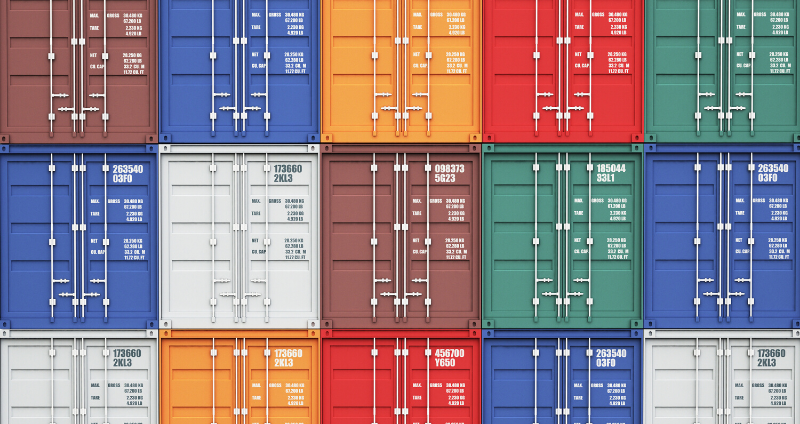
Global Container Crisis Wreaking Havoc On All Modes of Freight
It’s not a worldwide container shortage that is causing ocean rates to increase. It’s the uneven distribution of containers. There are enough containers, just not in the places where they are needed.
North American ports and container yards are stacked to the brim with empty containers desperately needed in Asia and Europe. As a result, container supply is severely limited with demand driving inflation of ocean transportation rates to unprecedented levels. This is spilling over into other modes, driving up demand in an already stretched capacity. Keep reading to learn more about how we got here and tips on what you can do to alleviate some of the impacts on your business.
How Did The Container Shortage Happen?
The COVID pandemic.
The global pandemic was first felt overseas in Asia, shutting down production as areas went into lockdown in an effort to curb the spread. Many factories closed temporarily and many containers were parked at ports. Shipping lines reduced capacity. Empty containers in North America were not sent back overseas.
As Asia and Europe emerged from lockdown and industries began ramping up production to meet the unprecedented demand for products, North America was locking down. The empty containers were not reloaded at the same rate as full containers were arriving.
All of this resulted in too many empty containers in North America, and not enough in Asia and Europe.
The Container Shortage Effect On Rates
This imbalance has caused a sharp increase in costs.
A full container load rate from Asia to the West Coast has seen a 400% increase in recent months. Adding insult to injury, at that rate, clients may not even be able to secure a space on the vessel as they may be outbid.
The Container Shortage Effect On Air and Ground Modes Of Transportation
Shippers have turned to air transportation where possible. This increase in demand is also driving up rates in this mode. However, air capacity is restricted alongside travel restrictions.
Commercial cargo can often be loaded into passenger planes. But with so few people traveling, there are far fewer opportunities to do this.
Ground carriers have also been impacted. Trucking companies have long since been facing an impending driver shortage as the existing driver pool reached retirement age, and are exiting the workforce. With no equalizing influx of drivers, ground freight rates began to rise.
With ground freight capacity already limited, chassis shortages in Southern California, and the container shortage is exacerbating port congestion throughout North America.
What’s An Importer To Do?
Unfortunately, smaller volume clients are going to feel the effects of this shortage the hardest. Large volume clients will have the ability to “pay to play” bidding their way to space on the vessel. Until containers are once again evenly distributed, this problem will persist.
Although there is very little that can be done, we have a few tips that may help:
- Work with a freight manager: Working with a freight manager is a bit like working with a mortgage broker vs individual banks. We are looking for ALL available opportunities to get your product where it needs to be, not just with one or two carriers. With our vast international agency network we are able to draw on the strengths of our partners. We can also look at all modes of transport including consolidation.
- Book early: The sooner you inform your Freight Manager about your need for space the better. We recommend currently booking your cargo at least 4 weeks before departure.
- Mitigate your risk: Purchase Cargo Insurance to provide physical loss/damage coverage of your goods. Ensure your goods are properly packaged and meet industry standards for shipping.
- Brace for a continuance until 2022: This is not forever, but it is for the foreseeable future. Review your increased costs against your future selling price.
.png)





%20Logo%20Vector-DBG.svg)