


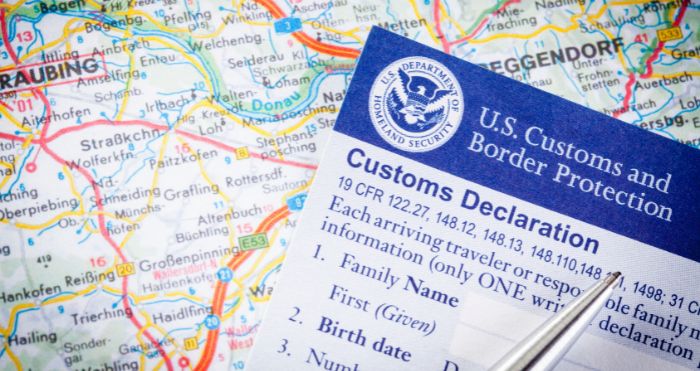
What You Need to Know About Reconciliation
Let’s imagine a scenario. You are importing agricultural products into the US, where market prices fluctuate constantly, and goods often sit in a warehouse for months before a final sale is locked in. Because of this, when your shipment hits the border, all you have is an estimated value.
Here is the problem:
U.S. Customs and Border Protection (CBP) does not work on estimated values. They require a definitive, finalized price at the time of entry.
Instead of being forced into an impossible compliance gamble, your broker flags the shipment for ‘reconciliation. This unique regulatory tool allows you to present CBP with a provisional estimate to clear the border immediately, while legally keeping the entry "open." Months later, once the final sale is made and the true market value is locked in, you reconcile the exact figures with Customs. You bridge the gap between CBP's strict data demands and the volatile reality of agricultural markets—ensuring 100% compliance while protecting your cash flow.
Reconciliation is not as well-known a system as we would like, which is too bad because it is actually one of the more streamlined processes and useful tools in an importer’s toolbox - especially when you work through a broker.
But what actually is reconciliation? In short, it is a silver-bullet solution to a specific and significant import challenge, and your business might just benefit greatly from it.
What is Reconciliation?
The reality of modern importing is that you don’t always know everything you need to know when you need to know it. There are certain situations in international trade where importers cannot possibly have the accurate information that Customs and Border Protection (CBP) requires for their import. Perhaps the valuation hasn’t been established yet due to an external factor, or proof for the Free Trade Agreement (FTA) it is seeking to qualify for is still forthcoming; there are many reasons why an importer may not know the answers to CBP’s questions as they reach Customs.
Reconciliation is, put simply, the option to flag certain specific details of specific import types as being uncertain. Essentially, it is an indication to CBP that an element of your declaration is an estimate, and that within a set timeline, you will return to correct the declaration with updated information.
This program is particularly advantageous for shipments, such as the one in the example above, that are awaiting specific documentation they do not yet have, such as proof of qualification for an FTA. It’s also useful for imports where the final valuation is yet to be determined, such as when the value is tied to the number of units ultimately sold.
There are many different reasons why informing CBP that you do not have the information you need ultimately serves your interests, and by flagging an entry for reconciliation, you are doing just that.
What Can Qualify for Reconciliation?
The reconciliation process is managed through the ACE Portal, and there are three entry types that are eligible for this process:
- Entry type 01: Free and dutiable formal consumption entries
- Entry type 02: Quota/Visa consumption entries
- Entry type 06: Foreign Trade Zone (FTZ) consumption entries
From within these three categories, only four types of information can be flagged for a potential reconciliation, although they can be applied either individually or in combination:
- The valuation of imported goods
- HTS 9802 - which is the Harmonized Tariff Schedule that allows US importers to pay duty only on the value that is added to an import abroad. Most typically, it is used for repairs, alterations, or assembly in other countries
- Eligibility for FTAs
- Tariff classifications, but only under very specific circumstances, such as a protest or court actions
Notably, all entries that are flagged for reconciliation need to be reconciled eventually - even if the variable hasn’t changed. A flag for an FTA qualification needs to be reconciled within 12 months of the date of importation. The others have 21 months from the date of the entry summary to reconcile.
Importantly, there is no option for an extension when it comes to this process, and reconciliation can only correct the specific element that you flagged - if you didn’t flag the right thing, then reconciliation as an option is off the table.
Who Can Qualify for Reconciliation?
Any importer can mark their imports for reconciliation, provided they meet the above criteria; however, importers must have a reconciliation rider as part of their importer bond before they can take advantage of this program.
This rider is an additional premium on your surety bond that accounts for the additional risk CBP assumes by allowing your goods to go prematurely.
Should I Go for Reconciliation or a Post Summary Correction?
One of the easiest traps to fall into when considering reconciliation is comparing it to Post Summary Corrections (PSCs). On the surface, they appear to be the same thing - going back and changing something about an entry that has already moved through a port of entry. However, the differences are stark, and the use cases are highly specific.
To begin with, PSCs are done after the fact - they are essentially changes to an entry when an error is detected. As a result, they are also limited to one per entry. Reconciliation, by contrast, can flag multiple entries and is made predictively. When you flag an import for reconciliation, you are signaling which goods need their information updated. Reconciliation is less a correction after the fact and more an indication to CBP that more information is coming.
Like so many things in the world of international trade, there are two very different paths to similar outcomes, but the use cases could not be more different.
How Can a Broker Help with Reconciliation?
The reality of the situation is that a broker is always recommended for reconciliation. While the concept may seem straightforward, its application is more nuanced than one might expect.
Not only is it complicated, from determining what qualifies for reconciliation, but it can be daunting as well. Through the ACE portal, importers must manually flag every entry one by one, and the process is as tedious as it is error-prone. Brokers have specific programs that can perform ‘blanket flagging’ and can save you a lot of time and energy in the long run. Add to that the fact that the penalties for doing it wrong are nothing short of devastating, and there’s really no reason not to reach out to a broker for assistance.
For help with applying for reconciliation, please contact the team at PCB today. We can help evaluate your goods and determine whether reconciliation makes sense, flag them in the ACE portal, and even monitor your liquidation timelines.
From start to finish, we’re here to help - get in touch today!





%20Logo%20Vector-DBG.svg)